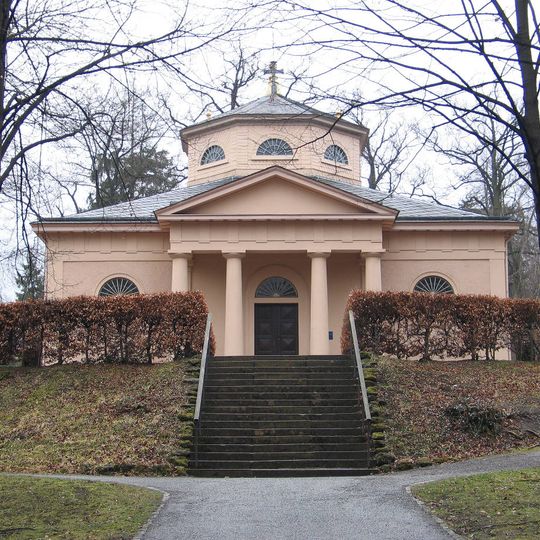
Weimarer Fürstengruft, Burial vault in Historical Cemetery, Weimar, Germany
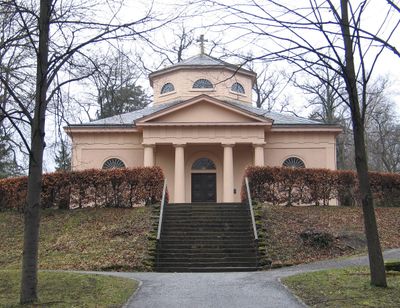
The Weimarer Fürstengruft is a neoclassical building with columns and geometric patterns located within a historical cemetery. Inside, multiple sarcophagi rest in a simply designed chamber with refined classical details.
The structure was built in the 1820s under Duke Charles Augustus to provide a dignified burial place for the ducal family. Its neoclassical design reflected the taste and power of the Weimar court during this era.
The vault holds the tombs of Goethe and Schiller, two writers whose work shaped German literature and remain deeply connected to the city's identity. Visitors can sense how the town continues to honor these figures as central to its own story.
The building sits on the edge of the cemetery and is easy to locate by following the main pathways. The interior spaces are fairly compact, making for a brief but rewarding visit to examine the architecture and tombs.
Architect Clemens Wenzeslaus Coudray designed the vault with precise classical proportions reminiscent of Italian Renaissance models. This stylistic choice was uncommon for German burial structures of the era and set a model for later mausoleums.
The community of curious travelers
AroundUs brings together thousands of curated places, local tips, and hidden gems, enriched daily by 60,000 contributors worldwide.