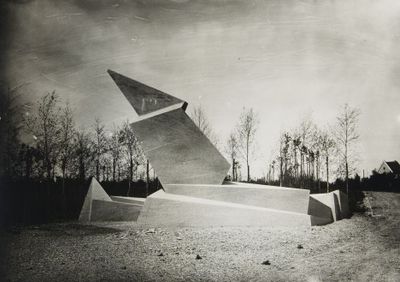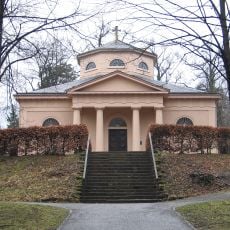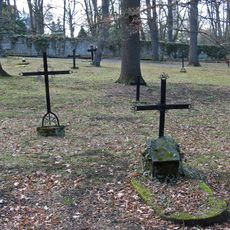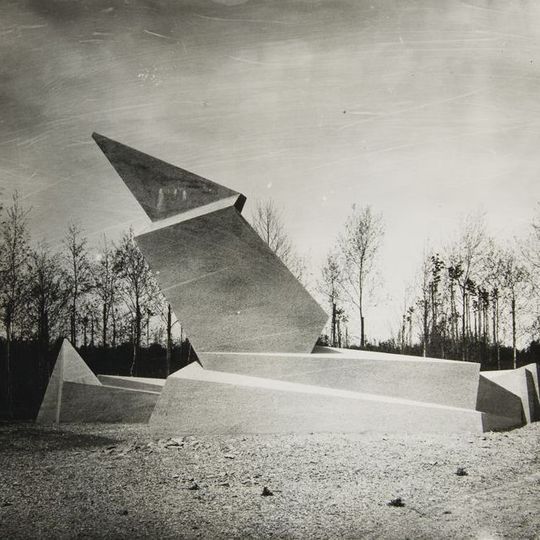
Monument to the March Dead, Cultural heritage monument at Historic Cemetery, Weimar, Germany.
The Monument to the March Dead is a memorial structure on the Historic Cemetery featuring angular concrete forms that rise from the ground. The design comprises geometric elements arranged to create a contemplative space without representational figures.
The memorial was designed in 1922 by Walter Gropius and Fred Forbát to honor workers killed during the Kapp Putsch of 1920. It was destroyed in 1936 and reconstructed in 1946, representing a return to commemorate those lost to political violence.
The memorial reflects early modern design principles where artists sought new ways to express historical tragedy through form rather than tradition. Its abstract geometry invites visitors to bring their own sense of remembrance to the monument.
The monument sits on the Historic Cemetery and is accessible by walking from the main entrance on Berkaer Street. The cemetery grounds are open to visitors and easy to navigate to reach the memorial site.
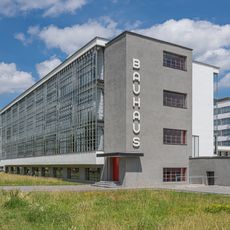
The monument draws from radical design philosophy developed at the Bauhaus school in Weimar itself. This connection between early modern design and memorial art makes it a rare example of experimental commemorative form from that era.
The community of curious travelers
AroundUs brings together thousands of curated places, local tips, and hidden gems, enriched daily by 60,000 contributors worldwide.