Mundeshwari Temple, Hindu temple in Kaimur district, India
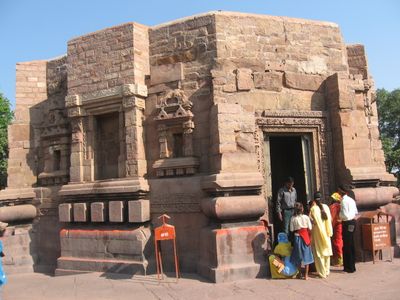
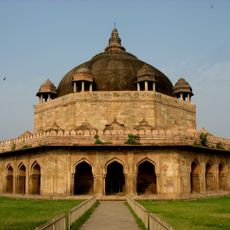
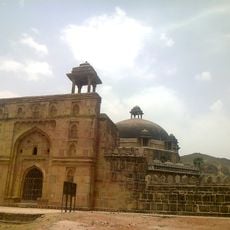
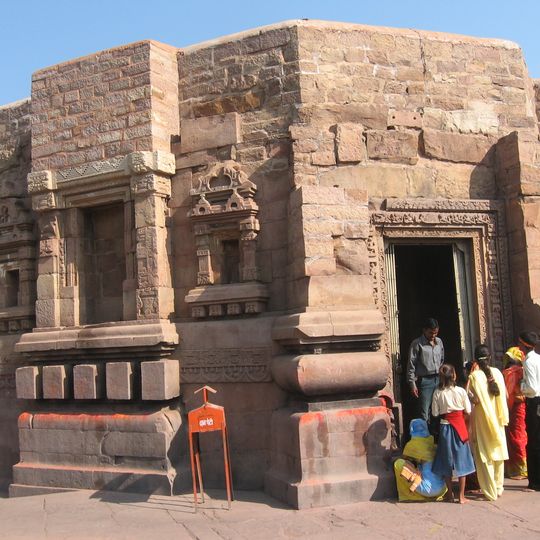
Mundeshwari Temple sits on a hill in Kaimur district, Bihar, and shows an eight-sided plan with carved figures of gods at its doorway. Each of the eight outer faces holds window openings that let daylight into the interior and give the structure its characteristic shape.
An inscription found in the debris names a local ruler, Mahārāja Udayasena, in his year 30; its lettering points to a post-Gupta date, most likely c. 570–590 CE, though the Bihar State Religious Trust Board argued in 2008 for 108 CE. A Brahmi seal of the Sri Lankan king Dutthagamani (1st century BCE) found here shows pilgrims came from as far as Sri Lanka. Architectural historian Buckee holds that the present octagonal shrine was built in the 16th–17th century from doorways and mouldings salvaged from 7th-century temples.
The temple holds particular importance during Navratri celebrations, when thousands of devotees gather to participate in traditional rituals and communal offerings.
The site opens daily in the early morning and closes in the evening, leaving enough time for a visit. Access is from National Highway 2, which provides a good connection to larger towns in Bihar.
The sanctum holds a Chaturmukhalingam, a four-faced Shiva lingam, beside the stone image of Devi Mundeshwari. Hindi accounts describe the lingam's stone as changing colour with the sun's position. Two stone vessels of unusual design also stand in the shrine.
The community of curious travelers
AroundUs brings together thousands of curated places, local tips, and hidden gems, enriched daily by 92,264 contributors worldwide.