禍福無門の碑, Memorial stele in Higashinada-ku, Japan.
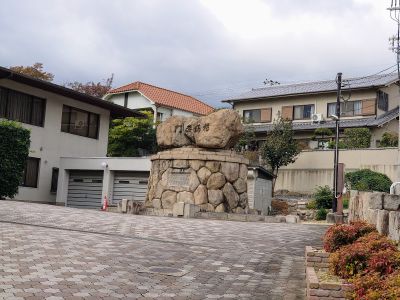
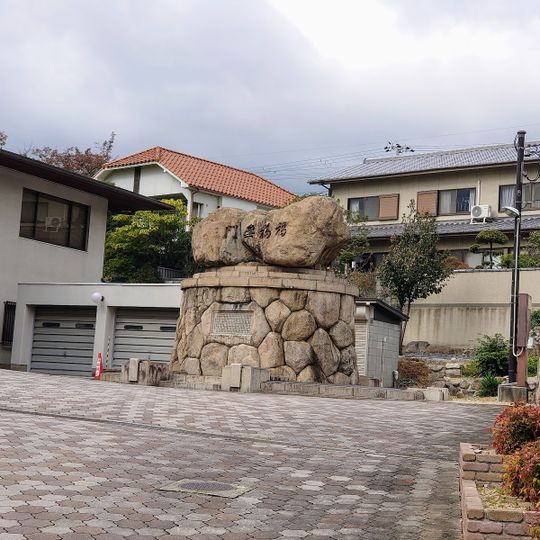
The Kofuku Mumon stele is a granite monument in Higashinada-ku composed of a 30-ton stone block rising approximately 3 meters from its stone foundation. The roughly cubic shape bears an inscribed message, creating a striking focal point that stands out clearly in the surrounding landscape.
The monument was constructed in 1939 by Sumiyoshi Village to commemorate the Great Hanshin Flood of 1938 that devastated the region. The community chose this location and form to ensure future generations would remember the powerful forces of nature that sweep through human settlements.
The inscription 'Kofuku Mumon' translates to 'fortune and misfortune have no fixed gate,' reflecting Buddhist philosophy about life's unpredictable nature. Visitors can contemplate this message carved into the stone, seeing how the community transformed its suffering into a teaching for others.
The stone sits in a publicly accessible location and can be visited at any time of day, allowing visitors to read the inscription up close. The surrounding area is flat and easy to reach, requiring no special equipment or advance preparation.
The stone was constructed using materials that were washed down from the mountains during the 1938 mudslide, making the monument quite literally built from the disaster itself. This direct connection transforms it from a mere symbol of remembrance into physical evidence of what occurred.
The community of curious travelers
AroundUs brings together thousands of curated places, local tips, and hidden gems, enriched daily by 92,232 contributors worldwide.