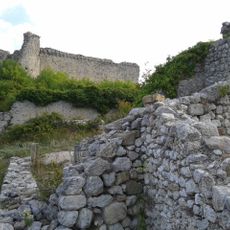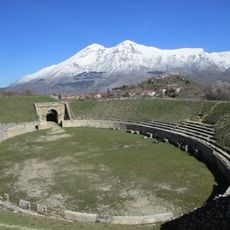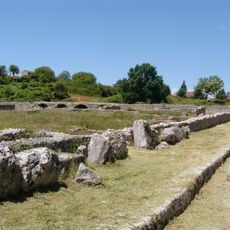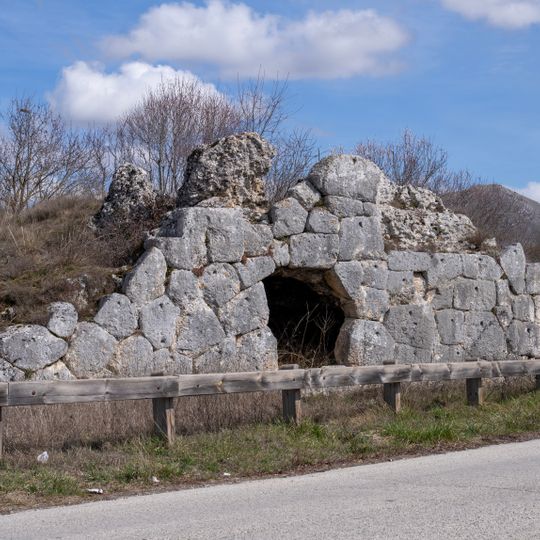
Alba Fucens Aqueduct, Roman aqueduct in Massa d'Albe, Italy.
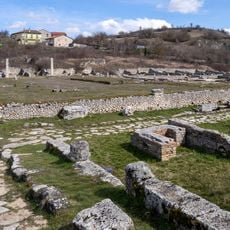
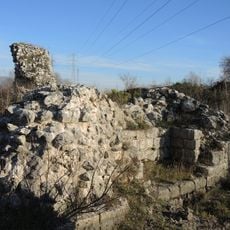
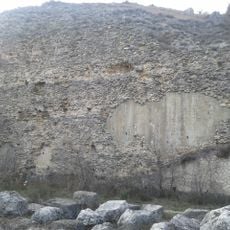
The Alba Fucens Aqueduct is a Roman water channel that extended through the Abruzzi hills, carrying water from the Sant'Eugenia spring to the ancient settlement. The structure featured stone arches, open channels, and a specialized siphon-bridge system used to manage elevation changes across the route.
The aqueduct was built in the first century AD to supply the Roman colony of Alba Fucens with water. The city had been established centuries earlier and developed into a strategic settlement in the Abruzzi region.
The aqueduct represents Roman engineering solutions visible in how water flowed across mountainous terrain. Visitors can observe how ancient builders adapted their techniques to overcome natural obstacles in the landscape.
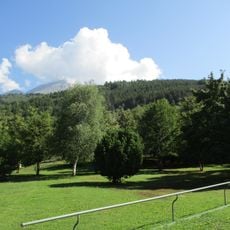
The remains can be explored by following marked trails through the hillside landscape near the archaeological site. Good footwear is recommended as the terrain is uneven and can be steep in sections.
The system incorporated a siphon-bridge mechanism at Arci, an engineering solution rarely seen in other Roman installations. This technique allowed water to be pushed under pressure through deep valleys instead of relying on traditional arched structures.
The community of curious travelers
AroundUs brings together thousands of curated places, local tips, and hidden gems, enriched daily by 91,488 contributors worldwide.