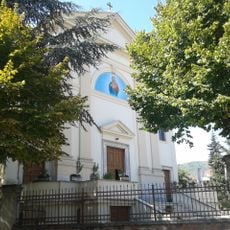
Villa Torlonia, Urban park in Avezzano, Italy
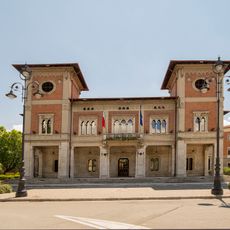
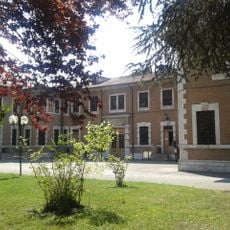
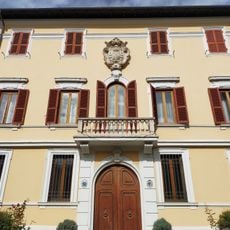
Villa Torlonia is a park in central Avezzano covering over three hectares, next to Piazza Torlonia, with a combined green area of about six hectares. Its romantic garden holds century-old trees such as Lebanese cedar, ginkgo, plane tree and yew, and along the avenues are fragments of stone capitals and of the original Madonna dell'Incile statue, erected in 1876 to a design by Carlo Nicola Carnevali and toppled in the 1915 earthquake. The grounds also contain the Torlonia palace, the octagonal wooden Torlonia pavilion, the peasant and pastoral civilization museum, the State Archive section and an artificial pond.
Alessandro Torlonia commissioned the villa and the adjoining Palazzo Torlonia, laying out the grounds on the model of the Italian garden and, above all, the romantic garden. In 1912 Benedetto Croce backed the extension of Law 364, Italy's first heritage-protection statute, to parks and gardens. The Torlonia family ceded park and palace to the comune of Avezzano in 1950; in 1978 they passed to the Ente Fucino and then to the Abruzzo Region, which transferred management to the comune by resolution of 27 January 2015, finalised in 2024.
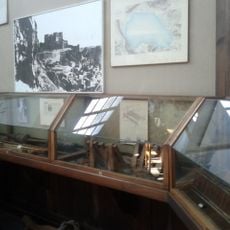
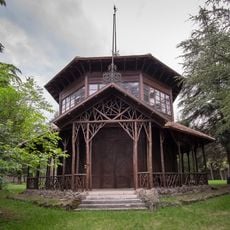
The Torlonia Pavilion, an octagonal wooden structure in Liberty style, was built in 1891 by the Roman carpenters Frosini and Boccaccini; it later housed the Museum of Peasant and Pastoral Civilization. The park's large buildings, once granaries and warehouses, now host exhibitions and fairs, and the garden displays the farm tools used by the first Fucino farmers to break and plough the land and thresh wheat and maize.
The park lies in the centre of Avezzano and, with the adjoining Piazza Torlonia garden, covers about six hectares; the villa park alone extends over three hectares. The Torlonia pavilion, the palace, the Museum of Peasant and Pastoral Civilization and the State Archive section stand inside the grounds. Since a 27 January 2015 regional resolution, management has been with the municipality of Avezzano, finalised during 2024.
The octagonal wooden Torlonia Pavilion, called "casino di caccia" or "chalet", was built in Liberty style in 1891 by the Roman carpenters Frosini and Boccaccini. It first held archaeological finds from the draining of Lake Fucino, then the museum of peasant and pastoral civilization.
The community of curious travelers
AroundUs brings together thousands of curated places, local tips, and hidden gems, enriched daily by 93,029 contributors worldwide.