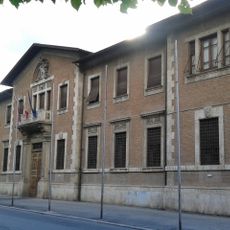
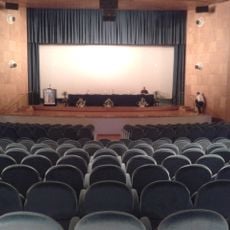
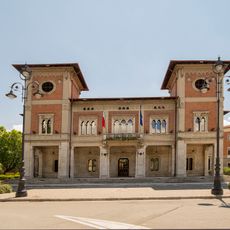
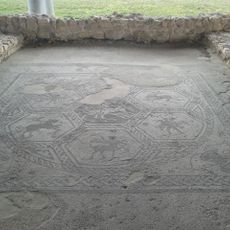
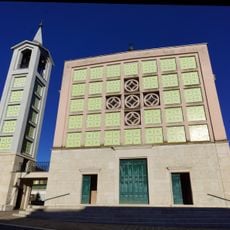
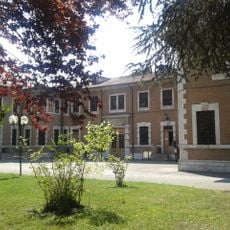
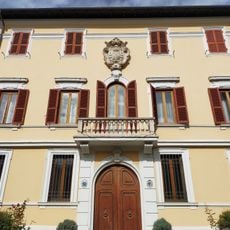
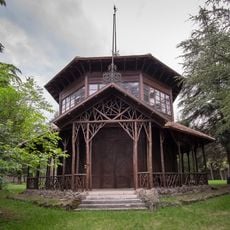
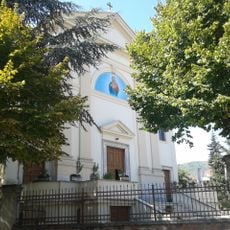
Aia dei Musei, Archaeological museum in Avezzano, Italy.
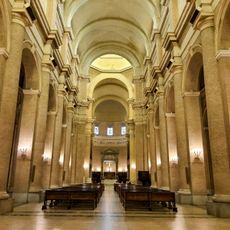
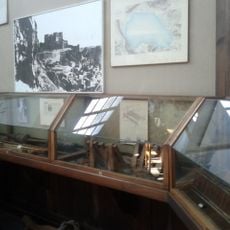
The Aia dei Musei houses over one hundred stone inscriptions spanning Roman, Medieval, and Renaissance periods, documenting social and political aspects of how people lived in the Marsica region. The collection consists of varying-sized objects and monuments arranged throughout the exhibition spaces of the building.
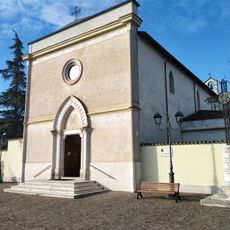
The lapidary museum was established by the municipal council under mayor Ferdinando Ruggieri on 5 June 1888 and inaugurated on 19 August that year in the presence of education minister Paolo Boselli. It was promoted by Orazio Mattei, inspector of excavations and monuments, and first run by Francesco Lolli. Since 1 May 2012 the collection has been housed in the Aia dei Musei, in rooms of the former municipal slaughterhouse.
The collection displays funerary stones and objects showing how people from different periods practiced their beliefs and organized their societies in this region. Walking through, you notice the distinct ways that Romans and medieval residents marked important moments in their communities.
The museum is housed in a former municipal slaughterhouse building with free admission and full wheelchair accessibility for all visitors. The exhibition areas are clearly marked and well-lit to allow comfortable viewing of the collections.
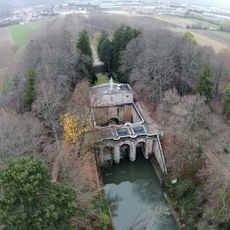
The section "Il filo dell'acqua" is named after Cesare Borsa and explains the Fucino drainage through the Claudian tunnels and the Incile outlet, the Roman intake works later enlarged in the 19th century. A 4th-century BC altar dedicated to the "god Fucino" is among the exhibits, and the lapidary keeps the 1814 tombstone of Poppedia Secunda, donated in 1934 by Adamo Buccella.
The community of curious travelers
AroundUs brings together thousands of curated places, local tips, and hidden gems, enriched daily by 94,014 contributors worldwide.