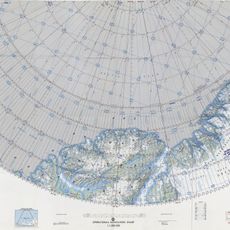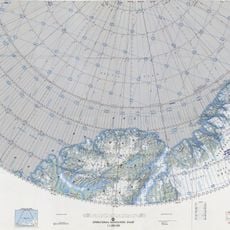
North Pole, Geographical pole in Earth's Northern Hemisphere.
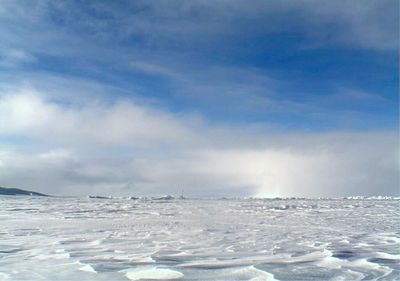
The North Pole sits at the point where Earth's rotation axis meets its surface at 90 degrees north latitude in the Arctic Ocean. The ice beneath this spot floats on the sea and constantly shifts with the currents, so the exact position drifts several meters each day.
In April 1909, American explorer Robert Peary claimed to have reached this point first, though historians still debate his route. Norwegian scientists reached the spot by airship in 1926 and became the first people to verifiably drop flags onto the ice.
The word "Arctic" comes from the Greek arktos, meaning bear, after the constellation Ursa Major that points toward the north. A compass needle at the geographic pole has no horizontal pull and can only point straight down. The magnetic pole itself is a magnetic south pole, so a compass "north" end is attracted to it.
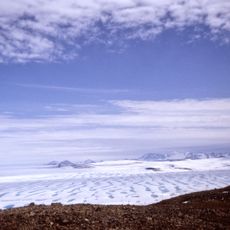
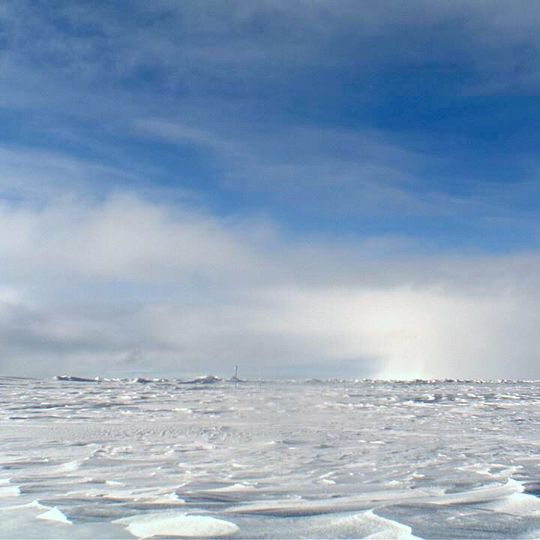
The geographic pole lies on a floating ice sheet 2 to 3 m thick above ocean 4,087 m deep, so the surface underfoot is never fixed. From the pole every horizontal direction is south, and longitude has no meaning at the point itself. The sun stays above the horizon from 21 March to 23 September, followed by weeks of twilight and months of polar night.
The sun circles the horizon completely during the six-month day and never rises higher than 23 degrees above the ice. Clocks lose meaning here, as all time zones converge at a single point and any time of day applies simultaneously.
The community of curious travelers
AroundUs brings together thousands of curated places, local tips, and hidden gems, enriched daily by 93,597 contributors worldwide.