Esquel, Pallasite meteorite in Esquel, Argentina
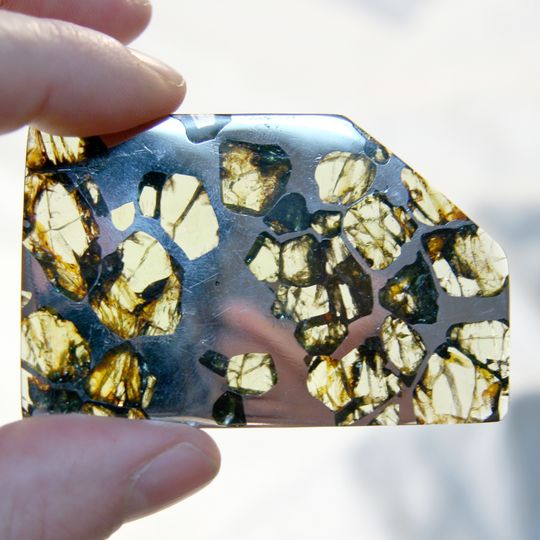
The Esquel meteorite is a pallasite containing translucent olivine crystals embedded in a nickel-iron matrix. The crystals form natural patterns that reveal the internal structure of this material from space.
A local farmer discovered the meteorite in 1951 while digging a pit near Esquel in Chubut Province for a water tank installation. The discovery consisted of several large fragments that quickly gained attention from the scientific community.
The meteorite sections displayed in museums around the world let visitors and researchers examine genuine material from space. These exhibits spark curiosity in people about how our solar system began.
The meteorite is now distributed across museums worldwide, making it possible to view it at different locations. If you plan to visit a museum with this specimen, research which institution near you displays a piece.
The material contains an unusually low sulfur content, giving scientists new insights into how planets form. This property makes it especially valuable for understanding the early development of our solar system.
The community of curious travelers
AroundUs brings together thousands of curated places, local tips, and hidden gems, enriched daily by 91,810 contributors worldwide.