Corcovado Volcano, Stratovolcano in Palena Province, Chile
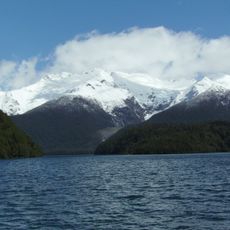
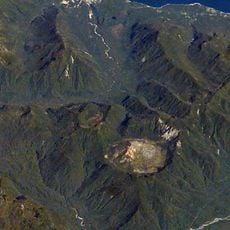
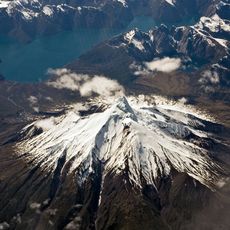
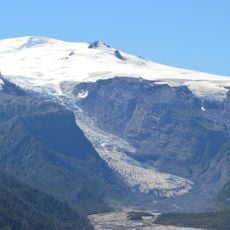
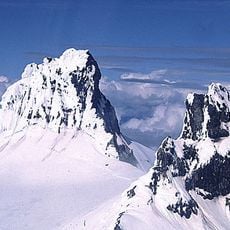
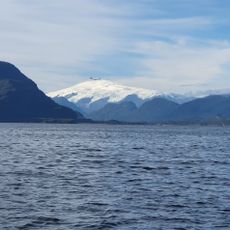
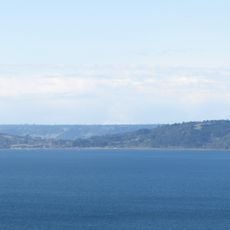
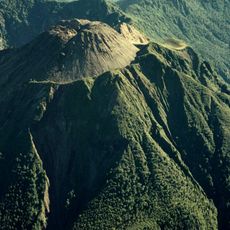
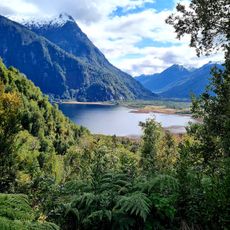
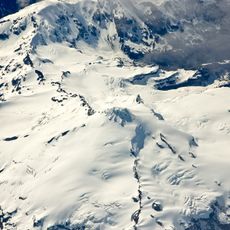
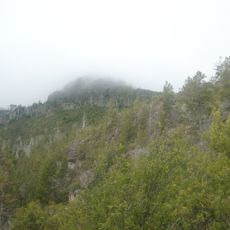
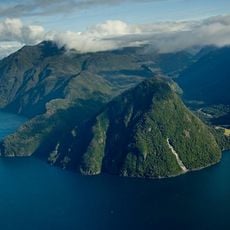
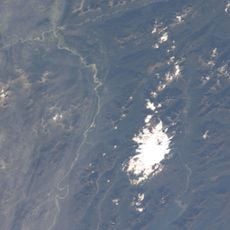
Corcovado Volcano is a 2,300 m stratovolcano in Los Lagos Region, Palena Province, Chaitén Commune, about 25 km south of the Yelcho River mouth. Its glacially eroded summit is a hooked, stepped wall, the surviving flank of a collapsed cone, resembling Puntiagudo. Six small lakes ring its north and east flanks, and prehistoric lava flows at its base are densely vegetated.
Corcovado's reported eruptions of 1834 and 1835 rest on second-hand accounts gathered by Charles Darwin, who was nearby on HMS Beagle during the 1835 Concepción earthquake and published the accounts in 1840. The activity was probably confused with that of Michinmahuida volcano. Three Holocene tephra layers are linked to Corcovado, the two youngest dated at 7,980 and 6,870 BP.
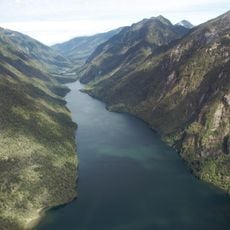
The volcano's hooked, cap-shaped summit, a surviving wall of its collapsed cone, appears on tourist material promoting the area as a holiday destination. Its name, Corcovado, means hunchback in Spanish, describing that crooked profile. The volcano and its surroundings lie within Corcovado National Park, 209,623 hectares, entered from Chaitén.
The volcano is accessed through the town of Chaitén, which serves as the main gateway to hiking trails and the surrounding protected area. Planning a visit during drier months makes navigation easier and safer.
Three Holocene tephra layers from major explosive eruptions are tied to Corcovado; the two youngest are dated at 7,980 and 6,870 years BP. The 1834–1835 eruption reports rest on second-hand accounts Charles Darwin collected, and are probably confusion with Michinmahuida.
The community of curious travelers
AroundUs brings together thousands of curated places, local tips, and hidden gems, enriched daily by 93,597 contributors worldwide.