Lion of Nectanebo
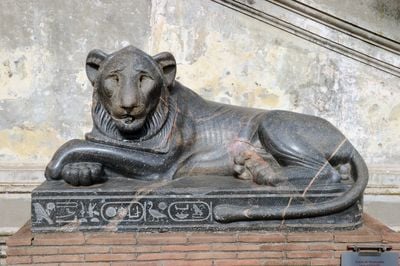
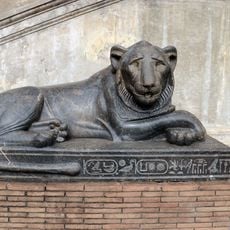
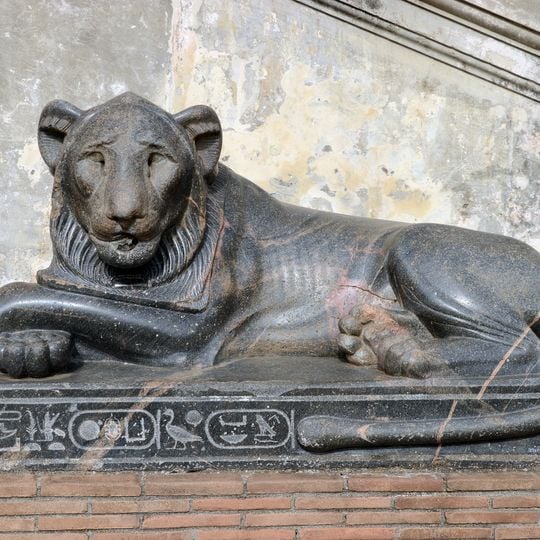
The Lion of Nectanebo is a statue carved from grey granite depicting a pair of standing lions with inscriptions on their bases that tell their story. The sculptures date from the time of Pharaoh Nectanebo I and are notably wide and heavy, with expressions that convey strength and pride.
These statues were originally erected at a site in the Egyptian delta region before being moved to Rome in ancient times, possibly to the Pantheon or an Isis temple. They were rediscovered in the 15th century and later used to decorate a fountain under Pope Sixtus V, before being transferred to the Egyptian Museum in 1839.
These lions come from an Egyptian shrine dedicated to the god Thoth, who served as a mediator between rival deities in ancient mythology. They may symbolize the unity of Upper and Lower Egypt under the pharaoh's rule and show how religious meaning was expressed through stone sculpture.
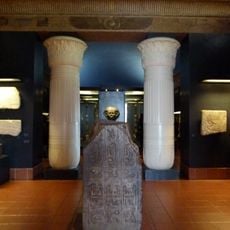
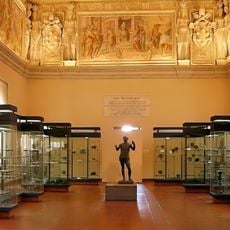
The statues are displayed at the Egyptian Museum in Rome and can be viewed during regular opening hours. The best way to see them is to allow time for exploring the extensive Egyptian collection and check their location in the museum beforehand.
The lions bear lengthy inscriptions on their bases that tell their original Egyptian story and remain readable today. These inscriptions allow us to trace their connection to the pharaoh and the ancient Egyptian shrine, making these artifacts rare surviving examples of documented Egyptian art.
The community of curious travelers
AroundUs brings together thousands of curated places, local tips, and hidden gems, enriched daily by 60,000 contributors worldwide.