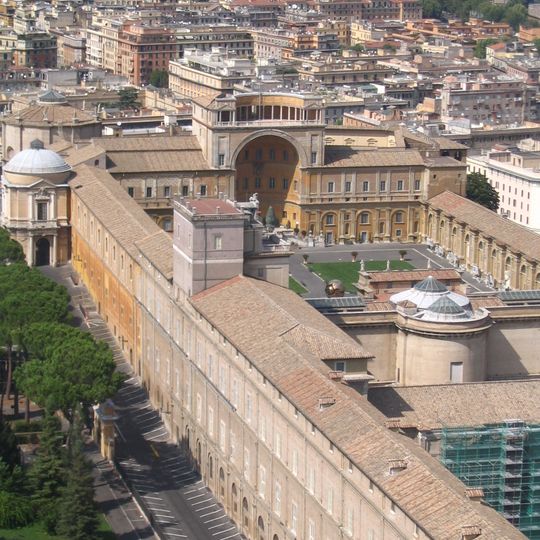
Gregorian Tower, Astronomical tower in Vatican City
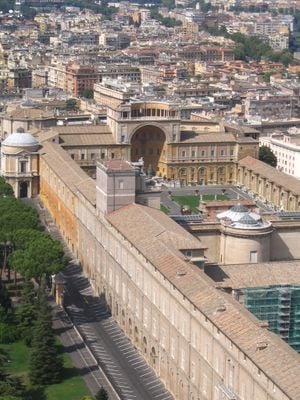
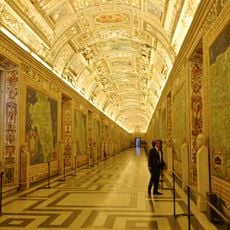
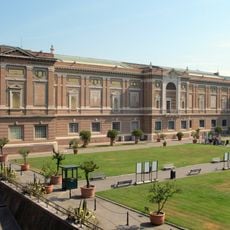
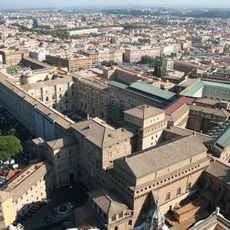
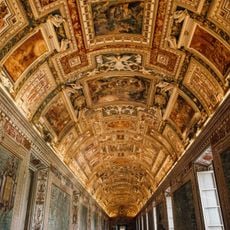
The Gregorian Tower is a square tower built between 1578 and 1580 by Ottaviano Mascherino above the Gallery of Maps, where the Villa Belvedere meets the Apostolic Palace. It has two floors and an intermediate mezzanine; the first floor holds the Sundial Room, once an open loggia whose arches Pope Urban VIII had closed. Its walls carry frescoes by Pomarancio and Matteino da Siena.
The tower was built between 1578 and 1580 by architect Ottaviano Mascherino to support astronomical studies for implementing the Gregorian Calendar Reform. Later under Pope Urban VIII, the loggia was transformed into an observation platform and the building was expanded.
The room takes its name from the white marble meridian line laid across the floor by papal cosmographer Ignazio Danti for the calendar reform, running north to south to measure the sun's noon height. A ceiling-mounted anemoscope by Danti, built to record wind force and direction, soon stopped working. The walls carry frescoes by Pomarancio and Matteino da Siena, and the room later served as the first Roman residence of Queen Christina of Sweden.
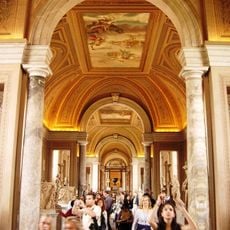
Access is through the Vatican Museums, and visitors should expect average to busy conditions, particularly in warmer months. The rooms are connected by narrow stairs and several steps, which can be challenging for people with mobility issues.
The meridian line in the Sundial Room is a straight strip of white marble set into the floor, running parallel to the north-south axis, built by the papal cosmographer Ignazio Danti to measure the sun's height at noon through the seasons. The room also held a ceiling-mounted anemoscope that measured wind force and direction; its mechanism was so delicate that it soon stopped working.
The community of curious travelers
AroundUs brings together thousands of curated places, local tips, and hidden gems, enriched daily by 93,768 contributors worldwide.