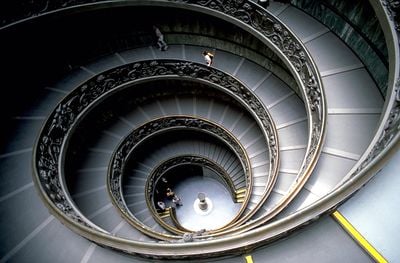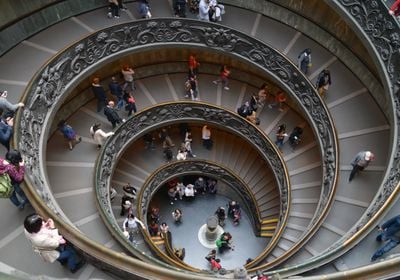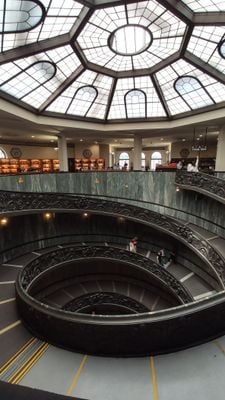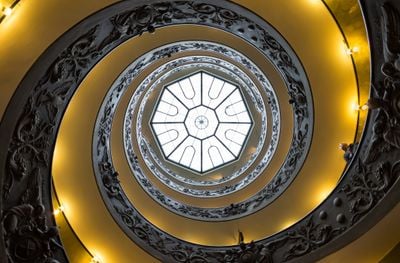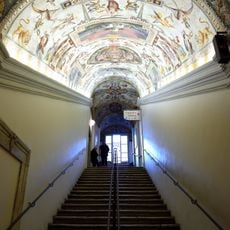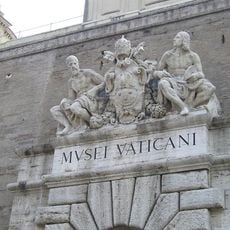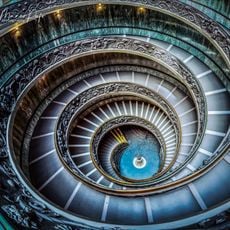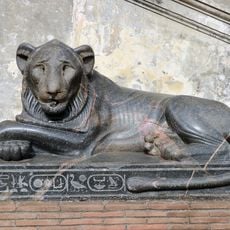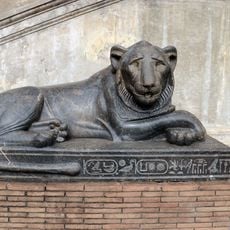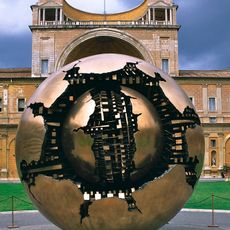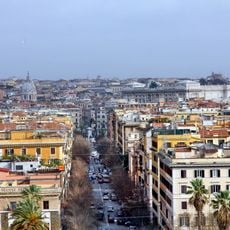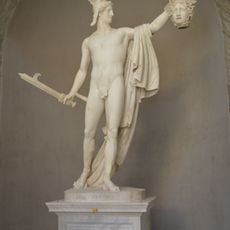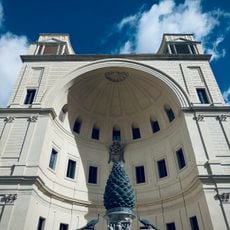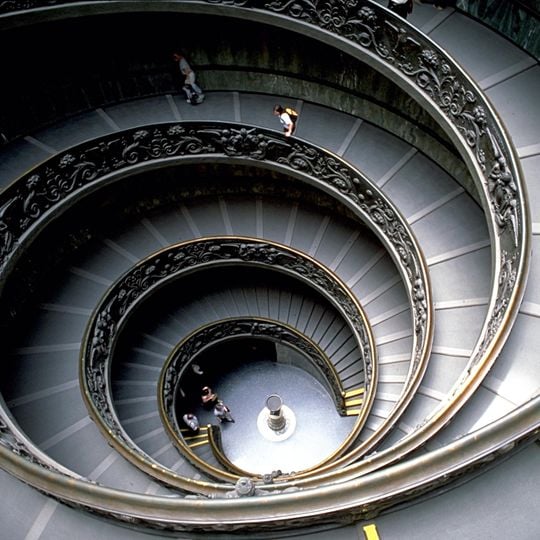
Bramante staircases, Helical stairs in Vatican Museums, Vatican City.
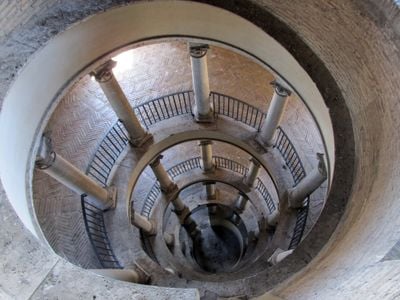
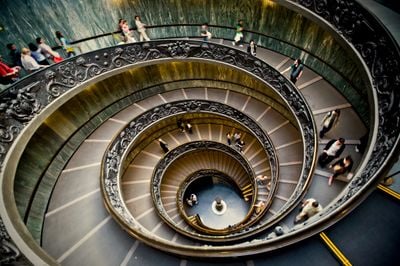
These stairs connect several floors and consist of two interlocking spirals that never meet. A ramp from the 16th century leads upward, while a modern version from 1932 serves as the exit.
Bramante designed the first ramp in 1505 for Pope Julius II to create a direct path between the palace and gardens. Giuseppe Momo later took up this solution and built a new spiral staircase in metal and stone.
The name honors Donato Bramante, though he never designed the exit staircase people remember today. Visitors descend along bronze railings, moving in a spiral without ever crossing paths with those ascending.
Visitors leave the museums through the newer staircase and follow their own path without crossing those ascending. The ramp remains wide enough for comfortable walking, even when many people descend at the same time.
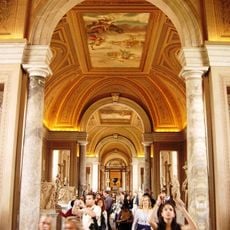
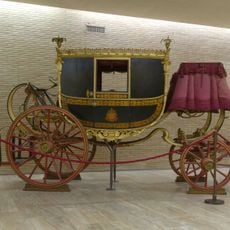
The Renaissance ramp was built so that riding animals and carriages could roll along it, which is why its slope remains gentle. Granite columns line the way and support a vault that runs continuously from top to bottom.
The community of curious travelers
AroundUs brings together thousands of curated places, local tips, and hidden gems, enriched daily by 91,020 contributors worldwide.