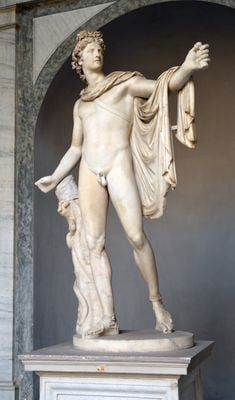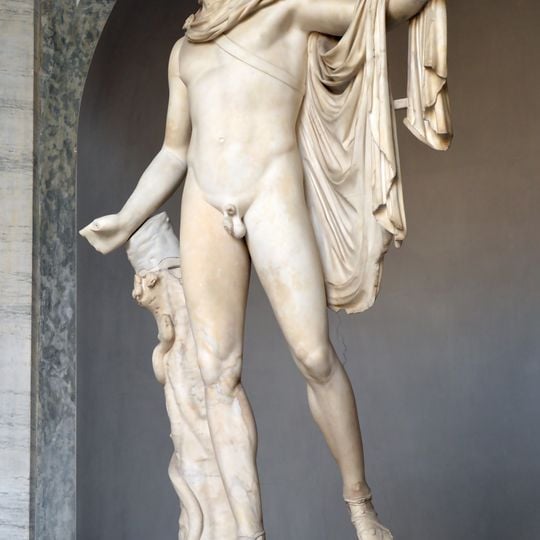
Apollo Belvedere, Marble statue in Vatican Museums, Vatican City.
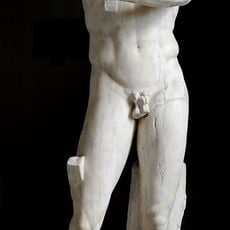
Apollo Belvedere is a 2.24 m white marble statue of the nude god as a standing archer, weight on his right leg, right arm lowered onto a tree stump, a cloak over his left shoulder and a strap across his chest. The head is cut off above the neck; the left hand is a copy of the Baia hand fitted in the restoration completed in 2024.
The marble was found in 1489, probably at Anzio, and belonged to Cardinal Giuliano della Rovere before he became Julius II. In 1511 he moved it to the Belvedere sculpture court. It is a Roman marble version, dated to the mid-2nd century AD, of a bronze made around 330–320 BC, attributed to Leochares. Montorsoli restored the missing arms in the 1550s; a new left arm based on the Baia hand was added in a restoration completed in 2024.
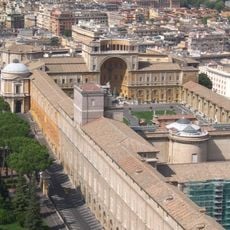
The figure received its name from the Belvedere Courtyard, where it was displayed after discovery and served for centuries as the highest example of ancient art. Artists traveled from across Europe to study and copy the proportions and pose of the sculpture.
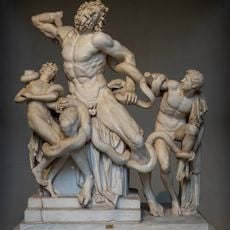
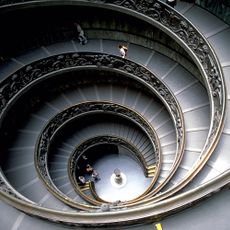
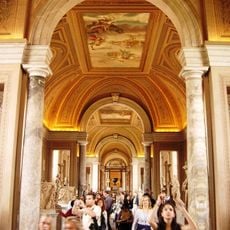
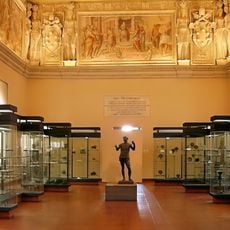
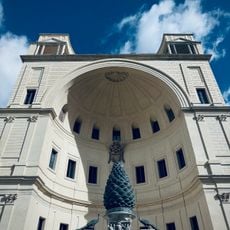
The statue stands in the Octagonal Court (Cortile ottagonale) of the Pio-Clementine Museum, beside the Laocoön group, not in a central hall. Visitors reach it through the Vatican Museums route; the courtyard is open and can be circled, so the missing head and the restored left arm are visible from several angles.
The sandals on the feet differ from typical Greek forms, prompting researchers to question the fidelity to the original. Additionally, the marble shows an unusually smooth polish that was rare for Roman copies and points to special craftsmanship.
The community of curious travelers
AroundUs brings together thousands of curated places, local tips, and hidden gems, enriched daily by 92,650 contributors worldwide.