Saudi–Iraqi Neutral Zone, Historical administrative division between Iraq and Saudi Arabia.
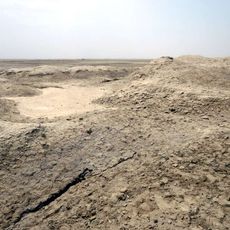
The Saudi–Iraqi Neutral Zone was a border territory covering approximately 7,000 square kilometers administered jointly by both nations, composed primarily of desert landscape. This shared arrangement continued until 1981, when Iraq and Saudi Arabia agreed to partition the zone equally to establish their current border.
The Protocol of Uqair established this neutral territory on December 2, 1922, following negotiations between British-controlled Iraq and the Sultanate of Nejd. The joint administration ended in 1981 when both states agreed to partition the zone equally.
Bedouin herding communities relied on this border region to move freely between pastures and water sources, following their seasonal patterns without encountering restrictions.
The area is not accessible as a single unified site today, as it was divided between Iraq and Saudi Arabia following the 1981 partition. Historical documentation and maps showing the former neutral zone boundaries are better consulted through archives or historical resources rather than through ground visits.
Oil companies began exploring the zone during the 1940s, transforming perceptions of the area from a remote border buffer into a region with economic potential. These early concessions marked the beginning of resource development interest in territory that had previously seemed economically insignificant.
The community of curious travelers
AroundUs brings together thousands of curated places, local tips, and hidden gems, enriched daily by 90,792 contributors worldwide.