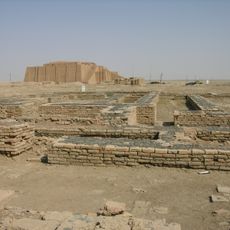
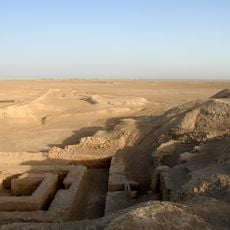
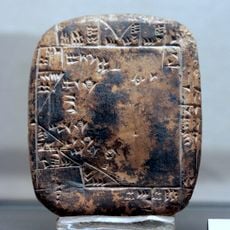
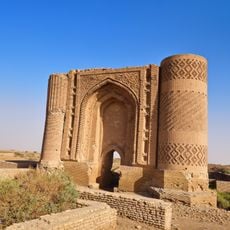
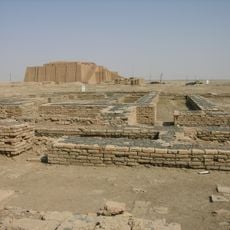
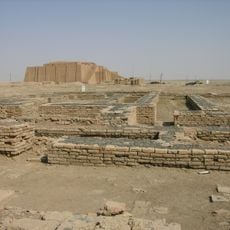
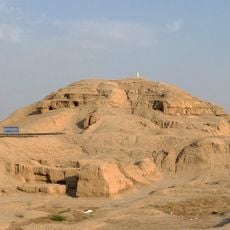
Ziggurat of Ur, Neo-Sumerian ziggurat near Nasiriyah, Dhi Qar Province, Iraq.
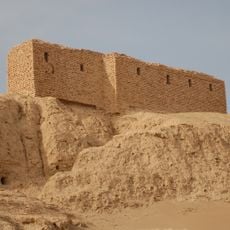
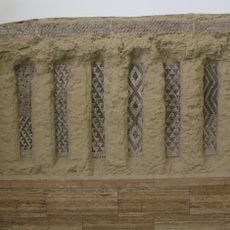
This massive mud brick and baked brick structure rises from the desert with three surviving terraces, featuring broad staircases and buttresses that once led to a temple platform dedicated to the moon god Nanna.
Constructed around 2100 BCE during the reign of King Ur-Nammu of the Third Dynasty of Ur, this monumental building served as a religious center for nearly two millennia before undergoing major Neo-Babylonian restoration in the 6th century BCE.
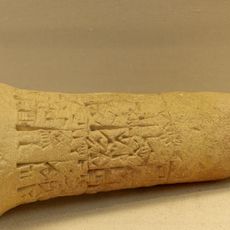
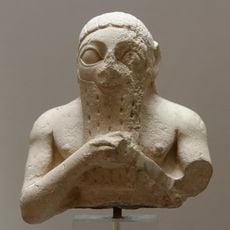
The Sumerian name Etemenniguru means "house whose foundation creates terror". The ziggurat stood within a temple complex that served as the city's administrative center and shrine of Nanna, patron deity of Ur. King Shulgi, who finished the construction, proclaimed himself a god to win the allegiance of cities.
Located near modern Al-Nasiriyah, the site remains accessible to researchers and visitors, though conservation efforts continue to address damage sustained during regional conflicts and environmental challenges affecting the ancient brickwork.
The Sumerian name recorded for the ziggurat is é-temen-ní-gùru, rendered as "house whose foundation creates terror". The three-layered core is mud brick faced with burnt bricks set in bitumen, the lowest layer from Ur-Nammu's build and the two upper ones from Nabonidus's restoration.
The community of curious travelers
AroundUs brings together thousands of curated places, local tips, and hidden gems, enriched daily by 92,130 contributors worldwide.