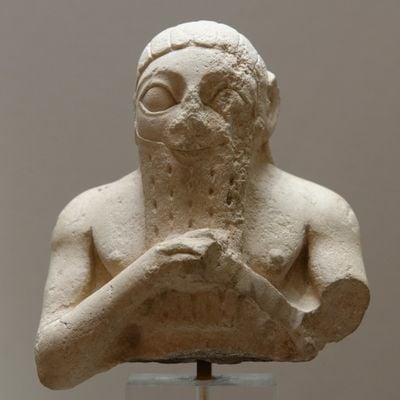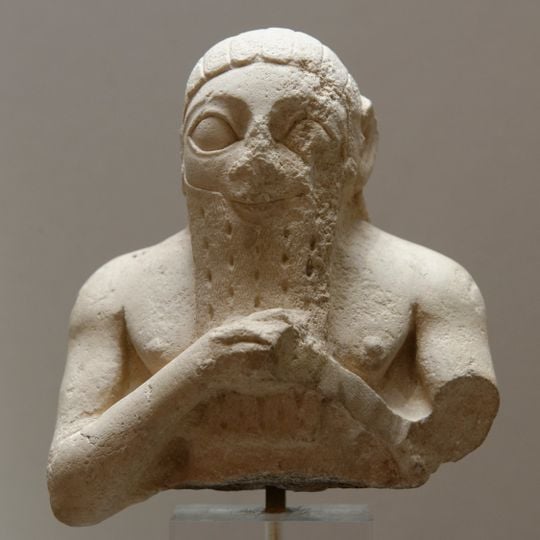
Adab, Archaeological site in Wasit Governorate, Iraq
Adab is an ancient Sumerian city located in Wasit Governorate with remains spread across several large mounds. The site contains layers of structures including temples, administrative buildings, and homes from different periods of antiquity.
The city emerged during the Early Dynastic period as an important center of power under rulers like Lugal-Anne-Mundu. It remained a significant place for many centuries, continuing through the period of the Ur-III dynasty.
The city god of Adab was Parag'ellilegarra, called "The Sovereign Appointed by Enlil". Temples stood here for Ninhursag, known locally as Digirmah, as well as Iskur, Asgi, Inanna and Enki. A foundation deposit of the ruler E-iginimpa'e, with a copper adze and two tablets, was buried beneath the E-mah temple.
The site lies in open desert about 35 km southeast of Nippur, closer to the Tigris than the Euphrates, and reaches it only by rough desert tracks. Its twelve low mounds, none above 12 m, are spread over roughly 1.5 by 3 km, so allow time to walk between them. The 1903-1905 excavations were never properly published, and objects were also bought locally, so identification of finds is uncertain.
Excavations in 1903 and 1904 by American archaeologist Edgar James Banks uncovered buildings spanning thousands of years of settlement history. The structures revealed at that time range from the earliest occupation layers through the later Ur-III period.
The community of curious travelers
AroundUs brings together thousands of curated places, local tips, and hidden gems, enriched daily by 92,647 contributors worldwide.