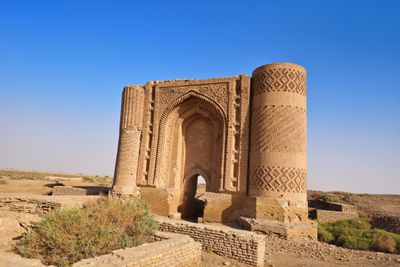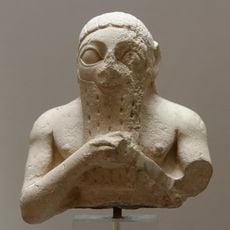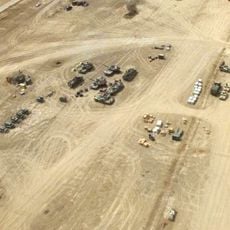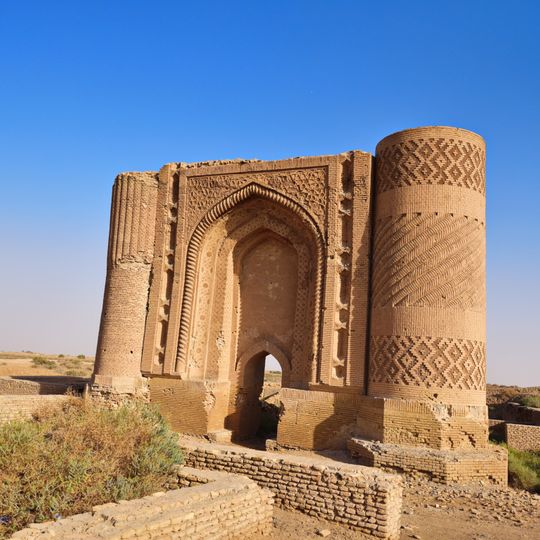
Wasit, Archaeological site and tentative world heritage location in Wasit Governorate, Iraq.
Wasit is an archaeological site in Wasit Governorate, Iraq, with ruins extending over several square kilometers along an ancient riverbed. The remains include foundations of residential buildings, public structures and fortifications that document different construction phases.
The settlement began around the year 700 as a military outpost and quickly developed into an important administrative center for the surrounding areas. In the 15th century the Tigris left its former bed, causing the city to lose its importance and gradually be abandoned.
The name Wasit means "middle" in Arabic, as the city lay halfway between Kufa and Basra. The 10th-century geographer Ibn Battuta described its fine quarters and orchards. The city had districts on both banks, such as Bab al-Zab and Al-Warraqin on the west and Burjuniya on the east.
A visit requires permission from local authorities, which may take several weeks to arrange. Access is via unpaved tracks, so a suitable vehicle and local guidance are recommended.
The site was surveyed in 1936–1942 and again in 1985, and the large mosque was cleared in four stages. A building called the minaret was excavated along with a tomb and a school from the 7th Hijri century, and conservation work on parts of the minaret followed worn walls.
The community of curious travelers
AroundUs brings together thousands of curated places, local tips, and hidden gems, enriched daily by 92,647 contributors worldwide.