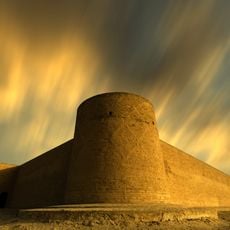
Nippur, Religious archaeological site in southeastern Iraq
Nippur is an ancient city in Al-Qadisiyya Governorate in southeastern Iraq that developed over many centuries as a religious center. The excavation site includes temples, residential buildings, and a scribal quarter whose layouts remain visible in the layered ruins today.
Occupation reaches back to the Ubaid period, and the Ekur temple of Enlil stood on the same spot from those early phases. Naram-Sin rebuilt the temple and the 17.5 m wide city walls around 2200 BC; Ur-Nammu later raised a 12 m brick terrace with a three-stage ziggurat. The city declined after the Euphrates shifted course in the 18th century BC and was resettled from the 14th century BC.
Nippur's name was written with the same cuneiform signs as Enlil, so the city and its god were inseparable in writing. Kings from other city-states sought control of the Ekur to legitimise their rule, and some rulers called themselves ensis on votive offerings left there. A village called Nuffar still stands beside the ruins.
The ruins lie near the modern village of Nuffar, about 8 km north of Afak and roughly 160 km southeast of Baghdad, reached by rural roads. The site is split by the old Shatt-en-Nil channel, with the main mound rising about 30 m above the plain. Bring water and sun protection; there is no shade.
Thousands of clay tablets from the scribal quarter contain parts of the Gilgamesh epic and different creation stories. These texts are among the oldest written narratives in human history.
The community of curious travelers
AroundUs brings together thousands of curated places, local tips, and hidden gems, enriched daily by 92,606 contributors worldwide.