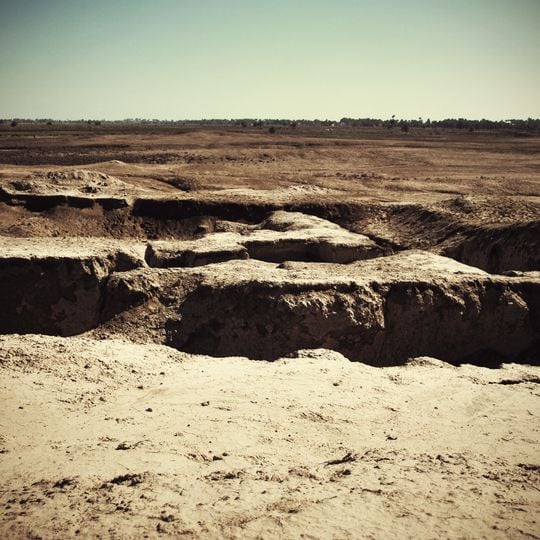
Marad, Archaeological site in Al-Qadisiyyah Governorate, Iraq
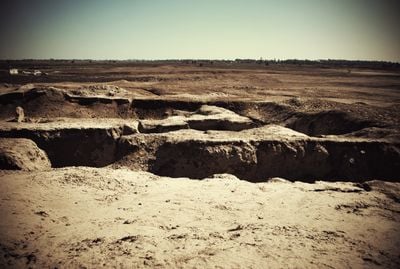
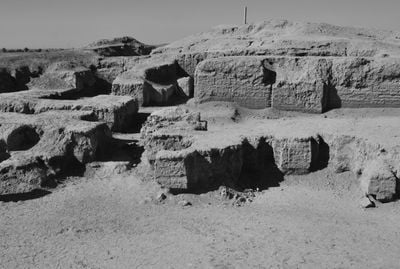
Marad, now Tell Wannat es-Sadum, is an archaeological site of about 50 hectares with a main mound called Bint as-Sheikh rising 14 metres above the plain. Its eroded mud-brick structures stand in stepped tiers, with flat-topped blocks and deep recesses cut beneath upper edges. A single thin pole projects from the summit of the highest mound.
Marad was founded around 2700 BC in the Early Dynastic II period. After Sargon of Akkad captured it, the city was ruled by governors; one, Lipit-ilē, son of Naram-Sin, built the temple of Lugal-Marada. It later passed to Ur III and then had a brief independent phase under kings such as Halun-pi-umu and Alumbiumu. Nebuchadnezzar II rebuilt the temple in the Neo-Babylonian period.
The city god was Lugal-Marada, associated with earth and the plow, and one of the Temple Hymns attributed to Enheduanna is devoted to him. The main sanctuary, the ziggurat E-igi-kalama ("House which is the eye of the Land"), was built by Lipit-ilē, son of Naram-Sin. A family archive of economic tablets from the city's brief independent period reached the antiquities market through illicit digging.
The site lies in the as-Saniya district of al-Qadisiyyah Governorate, reached from the town of Sumer and linked to Tell Abu Salabikh. The main mound, Bint as-Sheikh, rises 14 m at the northern edge, with smaller mounds and ridges across roughly 50 hectares. Ground is bare and uneven, so sturdy footwear helps.
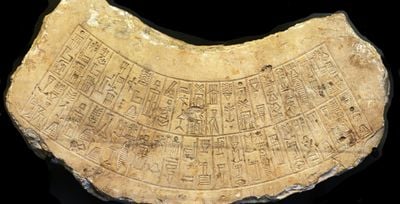
Specially crafted clay tablets with administrative texts offer insight into how the city organized its affairs and daily operations. These written records reveal the bureaucratic systems people relied on to manage their community.
The community of curious travelers
AroundUs brings together thousands of curated places, local tips, and hidden gems, enriched daily by 94,389 contributors worldwide.