Lion of Babylon, Ancient stone memorial in Babylon, Iraq
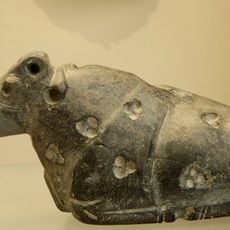
The Lion of Babylon is a black basalt sculpture in the ancient city of Babylon, Iraq, showing a lion standing over a supine human figure. It measures about 2 meters in length and 1 meter in height, weighs roughly 7,000 kg, and rests on a platform about 1 meter high.
The statue was first documented in 1817 by Claudius Rich, though it may have been seen as early as 1790 by Joseph de Beauchamp. Most experts now attribute it to Hittite craftsmen rather than to a commission by Nebuchadnezzar II, suggesting it was brought to Babylon as war booty. In 2013 the World Monuments Fund and the Iraq State Board of Antiquities cleaned and partly restored it, replaced its base and added a security barrier.
The lion is a national symbol of Iraq and has been adopted by institutions such as the Iraqi Football Association. In Mesopotamian art the lion trampling a fallen man conveyed the power of Babylon over its enemies.
The World Monuments Fund installed protective barriers around the sculpture to prevent damage from visitors. Restoration work has been carried out to preserve the surface of the heavy stone figure.
The carved depression is on the lion's back, not on the human figure beneath it; it is thought a saddle once stood there, possibly carrying a figure of Ishtar, goddess of love and war. The statue was cleaned and partly restored in 2013 by the World Monuments Fund and the Iraq State Board of Antiquities.
The community of curious travelers
AroundUs brings together thousands of curated places, local tips, and hidden gems, enriched daily by 93,339 contributors worldwide.