Spectro-Polarimetric High-Contrast Exoplanet Research, Advanced astronomical instrument at Very Large Telescope, Chile
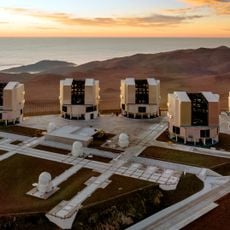
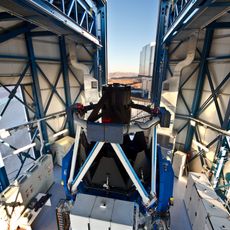
SPHERE is an advanced instrument at the Very Large Telescope in Chile designed to directly image planets orbiting distant stars. The tool uses adaptive optics to correct atmospheric distortion and a coronagraph to block out starlight, making faint planets visible in photographs.
SPHERE was installed in 2014 on Unit Telescope Melipal, transforming how astronomers could observe distant planets directly. This installation opened new research possibilities for studying how planets form and evolve around other stars.
SPHERE is run by a consortium led by the Institut de planétologie et d'astrophysique de Grenoble, bringing together 12 European laboratories and institutes, among them the Laboratoire d'astrophysique de Marseille, the Max-Planck-Institut für Astronomie, the Paris Observatory's LESIA, INAF and its Padua observatory, ONERA, the Lagrange laboratory in Nice, the University of Amsterdam, ETH Zurich, the Geneva Observatory and ESO.
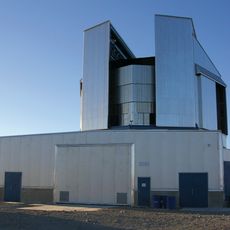
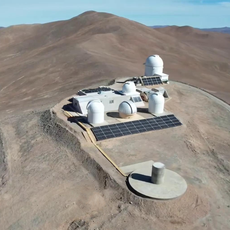
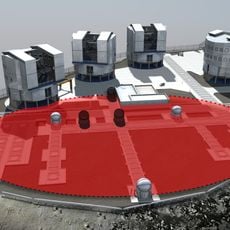
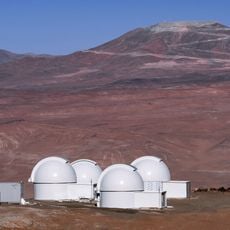
SPHERE sits at the Nasmyth focus of Unit Telescope 3, Melipal, at ESO's Paranal Observatory in Chile's Atacama Desert. It is not open to the public; observing time is allocated to the SPHERE consortium and ESO researchers. The instrument works in visible and near-infrared light, so observations are scheduled around atmospheric conditions at the site.
SPHERE's first announced planet, HD 131399Ab in 2016, turned out to be a background star; the consortium's first confirmed discovery came in July 2017 with HIP 65426 b, a dusty, thickly clouded planet orbiting a fast-rotating young hot star.
The community of curious travelers
AroundUs brings together thousands of curated places, local tips, and hidden gems, enriched daily by 93,318 contributors worldwide.