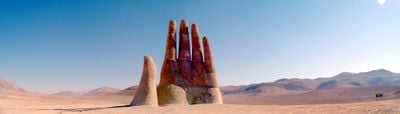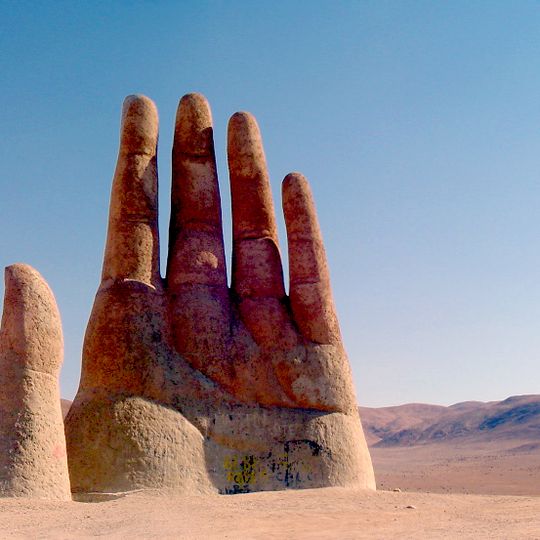
Mano del Desierto, Desert sculpture in Atacama, Chile.
A concrete sculpture shaped like a human hand rises 36 feet (11 meters) from the desert sand along the Pan-American Highway, 37 miles (60 kilometers) southeast of Antofagasta at an elevation of 3,600 feet (1,100 meters) above sea level.
Chilean sculptor Mario Irarrázabal created the monumental work in 1992 with funding from Corporación Pro Antofagasta to promote artistic dialogue about human presence in harsh landscapes and became part of his international series of similar sculptures.
The sculpture symbolizes human isolation and vulnerability within the endless Atacama Desert and has become a symbol of the relationship between civilization and extreme natural isolation in northern Chile.
Visitors reach the sculpture from Antofagasta by driving south on Route 5 for 30 miles (48 kilometers), then following a dirt road 1,500 feet (450 meters) west to the site, with free parking available directly beside the monument.
The structure requires regular maintenance to remove graffiti while enduring temperature differences exceeding 54 degrees Fahrenheit (30 degrees Celsius) between day and night in a region where decades can pass without rainfall.
Location: Antofagasta
Inception: March 28, 1992
Creator: Mario Irarrázabal
Height: 11 m
Made from material: reinforced concrete
GPS coordinates: -24.15854,-70.15641
Latest update: November 27, 2025 21:01
South America preserves a monumental heritage that reflects centuries of history, from pre-Columbian civilizations to the contemporary era. This collection includes archaeological sites, colonial-era religious buildings, public squares, and modern artistic creations scattered across the continent. Each monument tells a part of South American history, whether it be ancient fortresses, Baroque churches, or recent sculptures. Among these sites are the Santa Catalina Arch in Antigua, Guatemala, a 17th-century construction that once connected two convents; the Public Market in Porto Alegre, Brazil, a functioning 19th-century commercial building; and Desert Hand in Chile, a contemporary sculpture of 11 meters rising from the Atacama Desert. The Middle of the World monument near Quito, Ecuador, marks the equator line, while the Christ of the Pacific overlooks Lima from its hill. These monuments, whether of pre-Columbian, colonial, or modern origin, provide tangible insight into the cultural and architectural development of the South American continent.
This collection brings together locations that challenge the norms of conventional tourism. It offers the chance to discover places where nature, history, and human activities have created astonishing sites: a complex of 732 unfinished villas in Turkey, a Mexican island where hundreds of dolls are hung in trees, a Canadian lake with mineral-formed multicolored basins, and a Polish forest of 400 pines with mysteriously bent trunks facing north. The route also includes unique human-made creations, such as an art installation representing an isolated Prada store in the Texas desert, or the Japanese village of Nagoro where an artist populated the streets with 350 dolls after the residents left. Geological phenomena are also featured, including Darvaza crater in Turkmenistan, which has been burning continuously since 1971, the Great Blue Hole in Belize, a 124-meter-deep underwater cavity, and Colombia’s Caño Cristales river that changes color to red, yellow, and green from July to November. These destinations provide a different perspective on our planet and invite exploration of lesser-known facets of our world.
Circular architecture has fascinated builders since ancient times. This collection brings together Roman amphitheatres like the Colosseum, medieval towers such as the Round Tower in Copenhagen, baroque domed structures and modern constructions. The circular form offers practical advantages for acoustic properties, structural stability and optimal space usage. The selected buildings serve various functions: religious temples, fortifications, observatories, museums and event venues. Each example demonstrates how architects have adapted the circular form to local conditions and cultural requirements. From ancient stone structures to contemporary skyscrapers, this selection documents technical evolution across centuries.
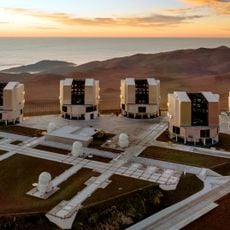
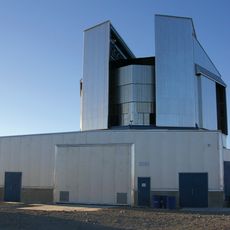
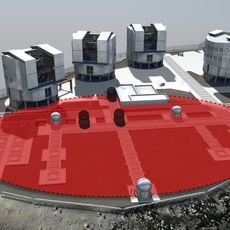
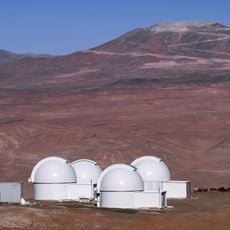
Very Large Telescope
57.9 km
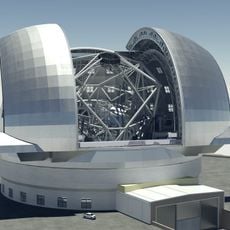
Extremely Large Telescope
48.1 km
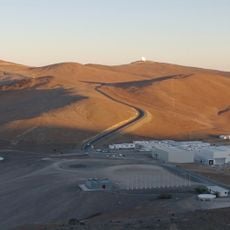
Paranal Observatory
57.9 km
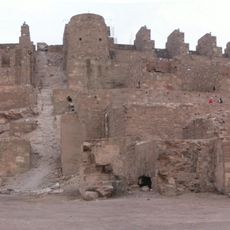
Ruinas de Huanchaca
58.7 km
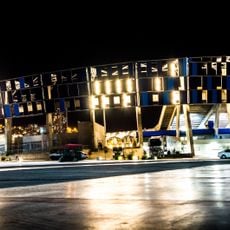
Estadio Regional de Antofagasta
59.9 km
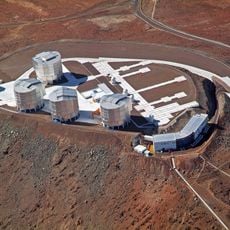
VISTA
56.5 km
Cerro Paranal
58 km
VLT Survey Telescope
58 km
Cerro Armazones
48 km
Spectro-Polarimetric High-Contrast Exoplanet Research
57.9 km
Next-Generation Transit Survey
56.2 km
Cerro Murphy Observatory
49.1 km
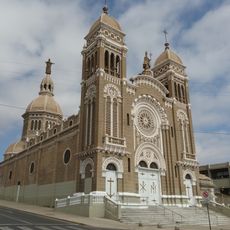
St. Joseph's Cathedral, Antofagasta
62 km
Hexapod-Telescope
49.1 km
Casa Abaroa
61 km
Basílica del Corazón de María, Antofagasta
60.9 km
Casa Camus
61.6 km
Teatro Municipal de Antofagasta
62 km
Casa de la Cultura Andrés Sabella
61.9 km
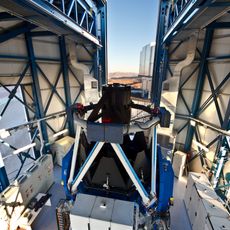
Very Large Telescope Interferometer
58 km
Plaza José Franciso Vergara, Antofagasta
60.1 km
Cuartel General de Bomberos de Antofagasta
61.9 km
SPECULOOS-South Observatory
56.2 km
Cerro Coloso
51.8 km
Museo Ruinas de Huanchaca
58.7 km
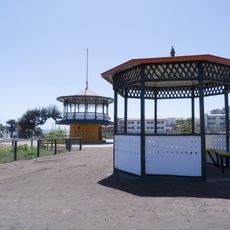
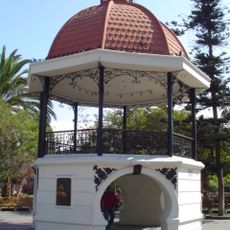
Kiosco de retreta de Plaza Colón
62.1 km
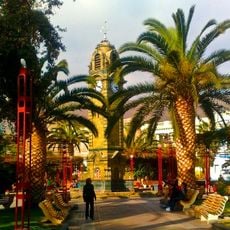
Torre del Reloj de la Plaza Colón
62.1 km
Escuela D-73
61.8 kmReviews
Visited this place? Tap the stars to rate it and share your experience / photos with the community! Try now! You can cancel it anytime.
Discover hidden gems everywhere you go!
From secret cafés to breathtaking viewpoints, skip the crowded tourist spots and find places that match your style. Our app makes it easy with voice search, smart filtering, route optimization, and insider tips from travelers worldwide. Download now for the complete mobile experience.
A unique approach to discovering new places❞
— Le Figaro
All the places worth exploring❞
— France Info
A tailor-made excursion in just a few clicks❞
— 20 Minutes