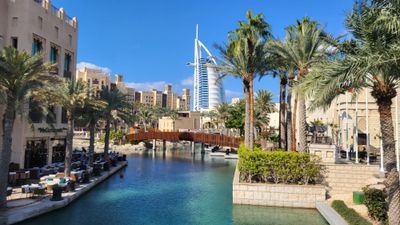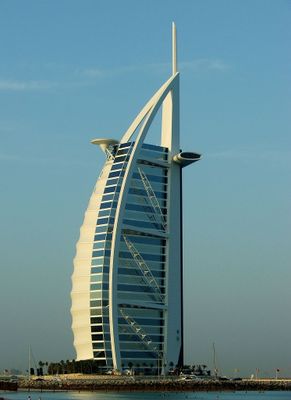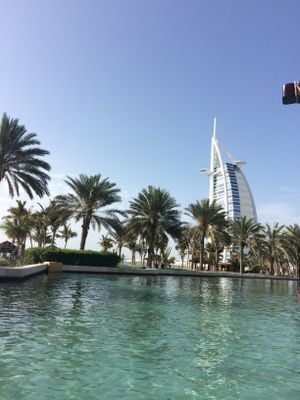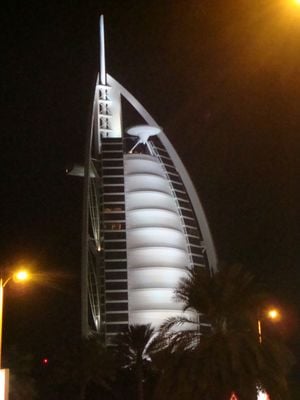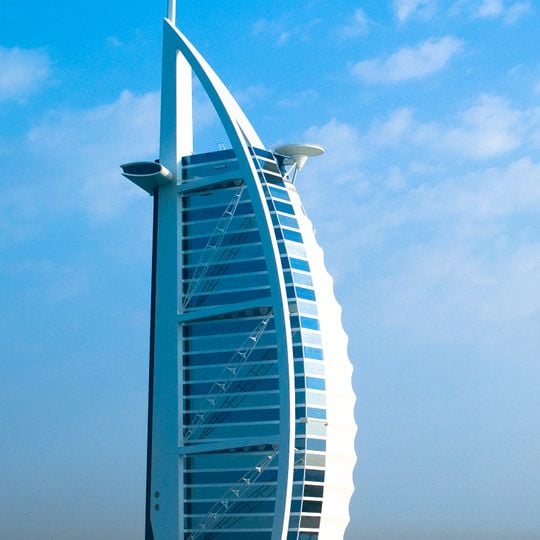
Burj al-Arab

Log in to your account

AroundUs is a community-driven map of interesting places, built by curious explorers like you. It grows with every review, story, and photo you share.
Connect to save your favorite spots, contribute locations, and create personalized routes.
By continuing, you accept our Terms and Conditions and our Privacy Policy
Add to collection
Map
Suggest a change
Share

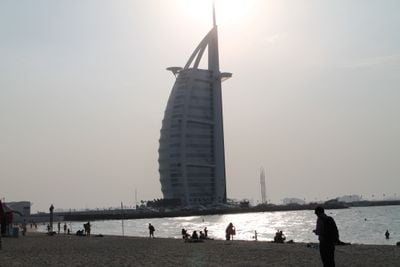
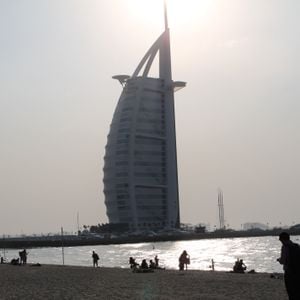
Burj al-Arab, Luxury hotel in Dubai, United Arab Emirates.

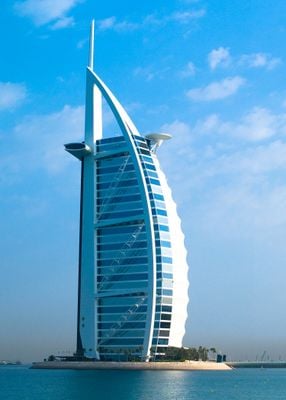
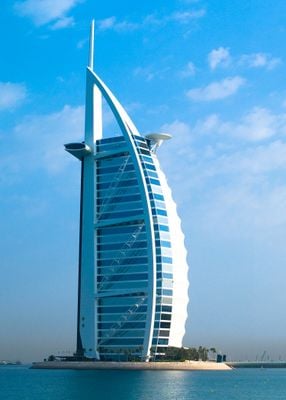
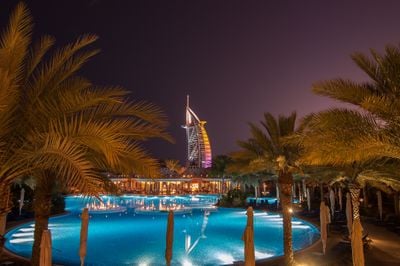
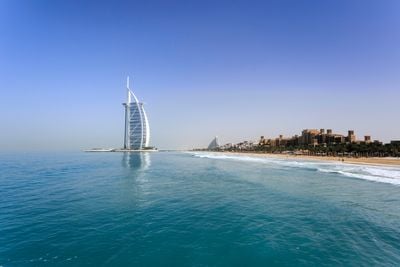
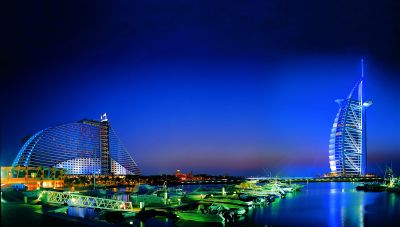
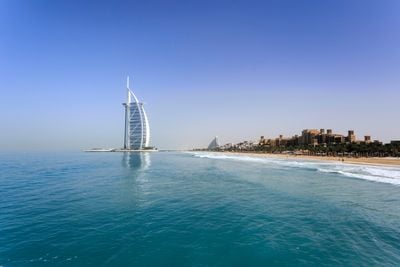
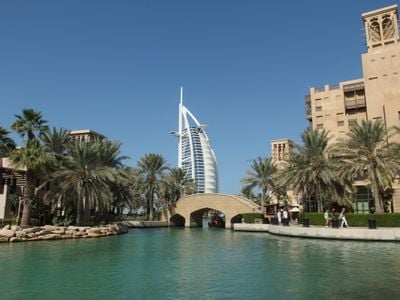
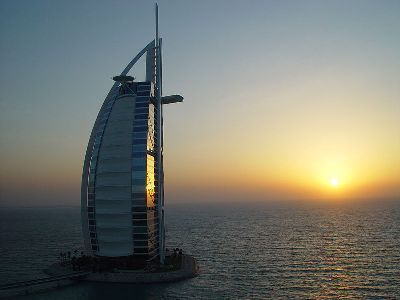
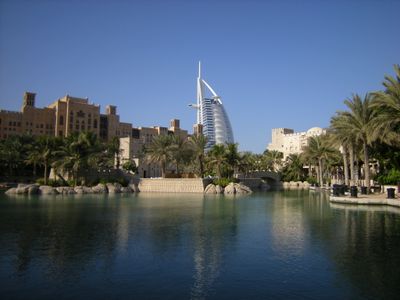
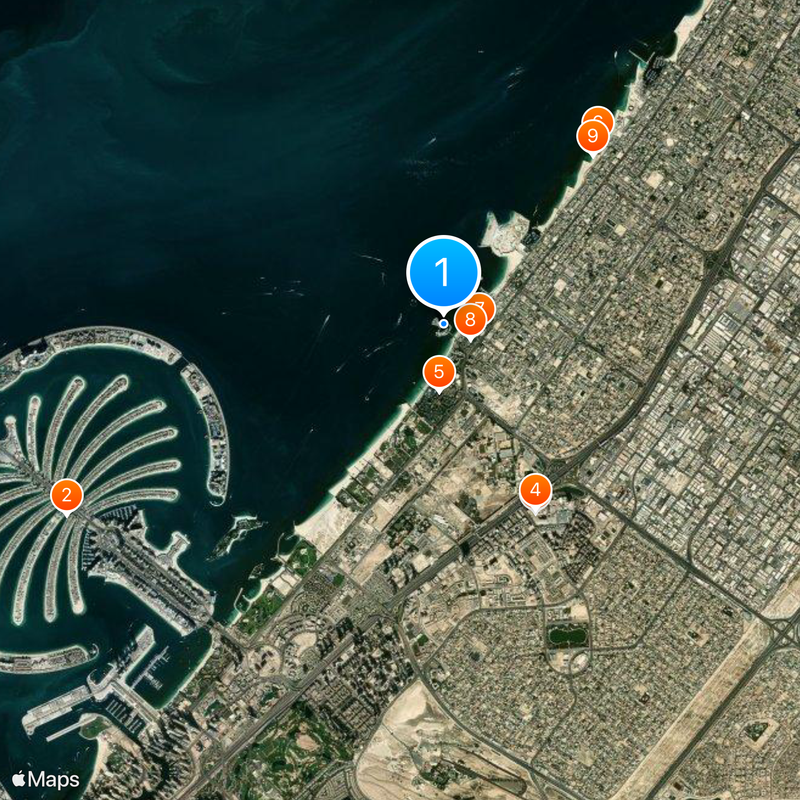
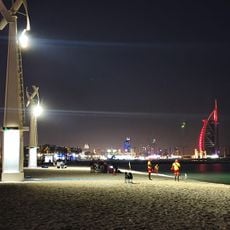
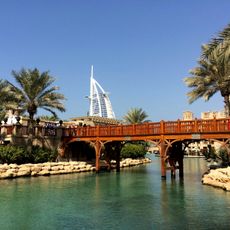
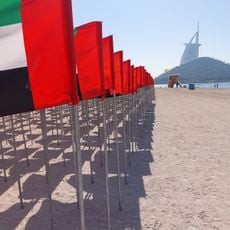
Burj al-Arab is a tower hotel in Dubai, United Arab Emirates, rising 321 meters on an artificial island off the Jumeirah coast. The sail-shaped construction stands on a platform connected to the mainland by a curved private bridge.

British architect Tom Wright designed the building, which opened on December 1, 1999 under the leadership of Sheikh Mohammed bin Rashid Al Maktoum. Planning began in the mid-1990s as part of a broader initiative to establish Dubai as an international tourism destination.

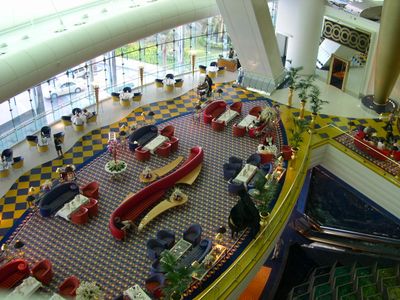
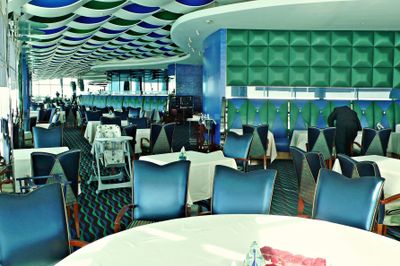
The building serves as a symbol of modern Dubai, where visitors and guests often enter the lobby to view the elaborate interiors with gold, marble, and colored fabrics. The atmosphere combines traditional Arabian hospitality with contemporary luxury, reflected in the presentation of tea, coffee, and local greeting rituals.

Visitors who are not staying as guests can access the lobby and public areas by advance reservation, typically through an afternoon tea booking or restaurant visit. Entry is via the private bridge, and most interior spaces are on upper floors with elevators leading to various dining areas and viewing points.

The artificial island sits roughly 280 meters from Jumeirah Beach and was positioned so the shadow of the building does not fall on neighboring coastal areas. A helipad on the roof at around 210 meters height occasionally serves as a tennis court or venue for special events.

Location: Dubai

Inception: 1999

Architects: Tom Wright

Official opening: December 1, 1999

Architectural style: high-tech architecture, postmodern architecture

Floors above the ground: 56

Floors below the ground: 3

Elevators: 20

Height: 321 m

Address: Umm Suqeim 3 - Dubai

Phone: +97143017777

Website: https://jumeirah.com/en/stay/dubai/burj-al-arab-jumeirah

GPS coordinates: 25.14139,55.18528

Latest update: December 2, 2025 22:50

World's tallest skyscrapers: the map of the tallest towers

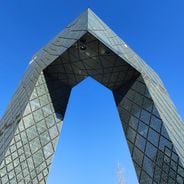
This collection brings together skyscrapers that showcase advances in modern engineering and architecture worldwide. These structures rise above metropolises and reshape city horizons, from the sail-shaped Burj Al Arab in Dubai to the CCTV headquarters in Beijing with its two linked towers. Each building reflects a unique architectural approach and technical innovations tailored to its environment. The selection spans all continents and features buildings with various functions. The Petronas Towers in Kuala Lumpur, 452 meters high and connected by a sky bridge, stand alongside New York’s One World Trade Center, which reaches 541 meters. The Lakhta Center in Saint Petersburg is notable for its twisted glass facade, while the Torre Costanera in Santiago offers panoramic views of the Andes. Whether residential buildings like the Eureka Tower in Melbourne or commercial structures such as the Kingdom Centre in Riyadh, these constructions demonstrate how contemporary architecture shapes 21st-century cities.

Architectural marvels in the UAE

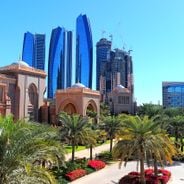
The United Arab Emirates feature an architectural landscape where modern structures coexist with historical remnants. In Dubai, the Burj Khalifa rises to 828 meters and is the tallest skyscraper in the world, while the artificial island of Palm Jumeirah demonstrates the country’s coastal engineering skills. In Abu Dhabi, the five Etihad Towers line the waterfront, and the Qasr Al Hosn, built in the 18th century, is the capital’s oldest stone building. These modern achievements sit on land that also preserves ancient traces, such as the tombs of Jebel Hafeet carved into the rock more than 5,000 years ago. Cultural and religious buildings round out this overview. The Sheikh Zayed Grand Mosque covers over 22,000 square meters and invites visitors to explore its architecture and prayer halls. The Louvre Abu Dhabi displays international collections beneath a metal dome designed by Jean Nouvel, creating distinctive light effects inside. In Ajman, the local museum is housed in a restored 18th-century fortress, while the Dubai Opera takes the shape of a dhow, a traditional regional boat. These sites offer varied perspectives on the architectural development of the Emirates and merit thorough exploration.

Remarkable sites in the United Arab Emirates: contemporary architecture, cultural heritage and tourist attractions

The United Arab Emirates feature contemporary architectural achievements and monuments that reflect their heritage. Over a few decades, the country has developed infrastructures attracting millions of visitors: glass and steel towers redefining city skylines, international museums showcasing collections from various eras, custom-made islands spread across the Persian Gulf. Alongside these recent constructions, stone forts and mosques serve as reminders of the region's history and traditions.

Postmodern architecture worldwide: 50 buildings you should see

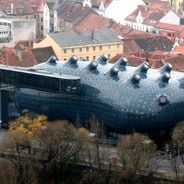
Postmodern architecture emerged in the 1970s as a response to the rigid principles of modernism, reintroducing color, ornament, and historical references into contemporary building design. The movement evolved over decades, producing structures that challenge conventional forms and experiment with different materials and surfaces. These buildings demonstrate varied approaches to design, from playful facades to complex geometric constructions, showing how architects employ new technologies while engaging with historical stylistic elements. The collection includes cultural institutions such as the Guggenheim Museum Bilbao and Casa da Música in Porto, public buildings like Seattle Central Library and Almere City Hall, and religious structures such as the Jubilee Church in Rome. Other examples include the SIS Building in London, Dancing House in Prague, and Niterói Contemporary Art Museum in Rio de Janeiro. The Louvre Pyramid in Paris and the Wexner Center for the Arts in Columbus show different interpretations of postmodern principles. The Piazza d'Italia in New Orleans with its colored colonnades and the Portland Building with its decorated facade represent early postmodern works in the United States.

Reviews

Visited this place? Tap the stars to rate it and share your experience / photos with the community! Try now! You can cancel it anytime.

« Burj al-Arab - Luxury hotel in Dubai, United Arab Emirates » is provided by Around Us (aroundus.com). Images and texts are derived from Wikimedia project under a Creative Commons license. You are allowed to copy, distribute, and modify copies of this page, under the conditions set by the license, as long as this note is clearly visible.

Discover hidden gems everywhere you go!

From secret cafés to breathtaking viewpoints, skip the crowded tourist spots and find places that match your style. Our app makes it easy with voice search, smart filtering, route optimization, and insider tips from travelers worldwide. Download now for the complete mobile experience.


Around Us App Screenshot

A unique approach to discovering new places

Le Figaro

All the places worth exploring

France Info

A tailor-made excursion in just a few clicks

20 Minutes