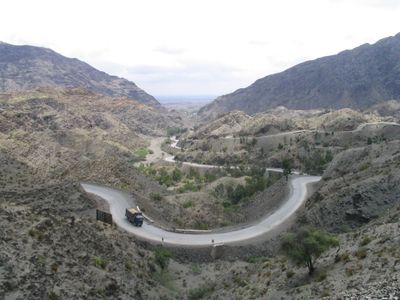
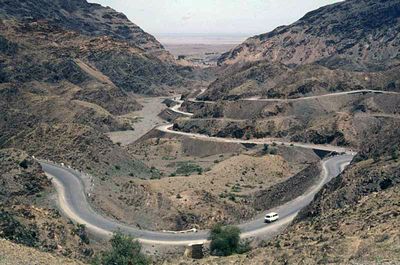
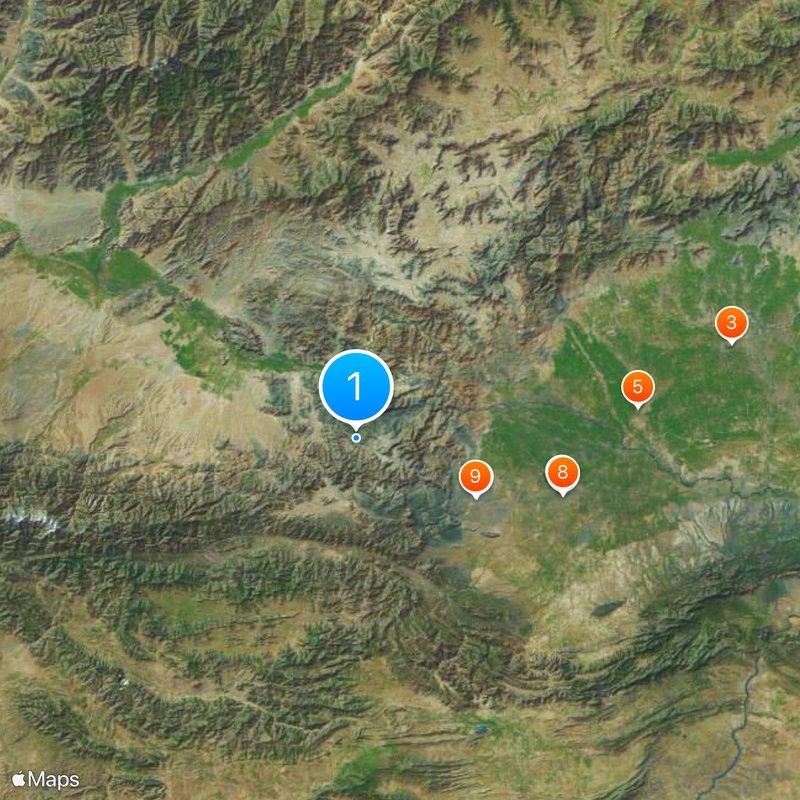
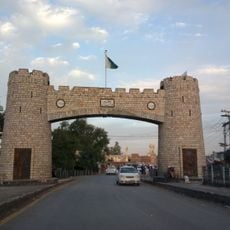
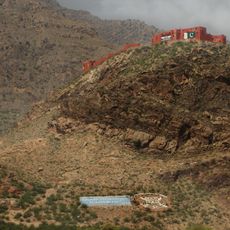
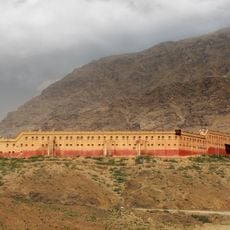
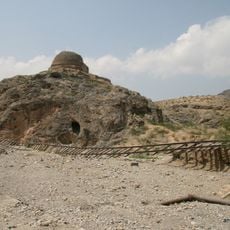
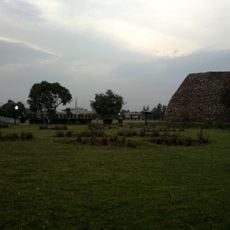
Khyber Pass, Mountain pass between Peshawar Valley and Landi Kotal, Pakistan.
Khyber Pass is a mountain corridor through the Safed Koh range, connecting Peshawar Valley to Landi Kotal and extending for roughly 53 kilometers. The route winds through tight ravines with steep limestone walls that rise up to 300 meters in some sections.
Caravans used this corridor for many centuries as part of the Silk Road, linking Central Asia to the Indian subcontinent. British colonial administration built a fortified roadway in the 19th century to ease military and commercial movement through the difficult terrain.
Pashtun clans, especially the Afridis and the Shinwari, long treated the pass as their own and levied tolls on travellers for safe conduct; this income made challenges to Shinwari authority fiercely resisted. Villages within the pass are inhabited by Afridi clansmen, and British Indian Army units left monuments along the route that can still be seen from the highway.
Visitors must apply for a special permit before any visit and check current security conditions for the border area between Pakistan and Afghanistan. The best time to travel falls in the milder months, as extreme temperatures and occasional closures can complicate crossing attempts.
The Khyber Pass Railway from Jamrud to the Afghan border near Landi Kotal opened in 1925, built by British India for strategic reasons. During World War II, British forces laid concrete dragon's teeth on the valley floor against a feared Axis tank advance. The pass area also gave its name to "Khyber Pass copies", locally forged weapons made from steel in blacksmiths' forges.
The community of curious travelers
AroundUs brings together thousands of curated places, local tips, and hidden gems, enriched daily by 92,183 contributors worldwide.