Shkelzeni Peak, Mountain summit in the Albanian Alps, Tropoja, Albania
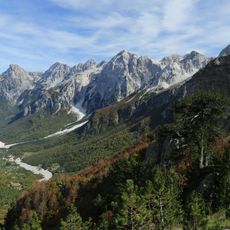
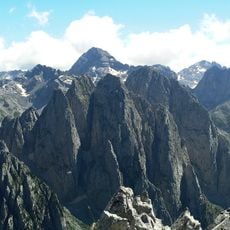
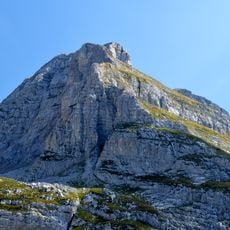
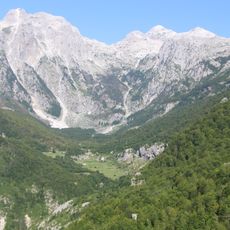
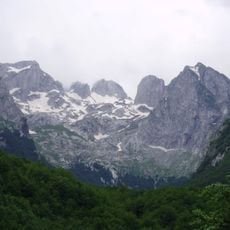
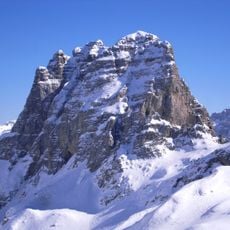
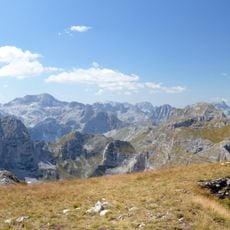
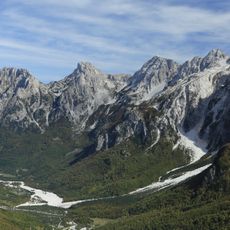
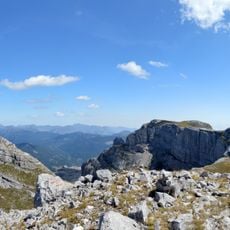
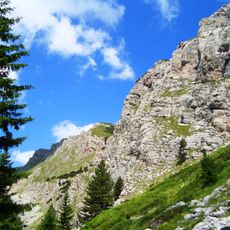
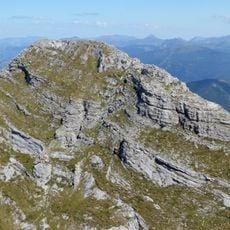
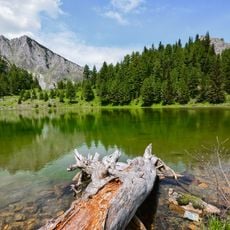
Shkëlzen is a massif in the Albanian Alps of northeastern Albania, not on the Kosovo border. Its highest peak, Maja e Shkëlzenit, reaches 2,407 m and forms a sharp ridge with the southwestern peak of Radesha (2,314 m). The mountain is built of Mesozoic limestone and dolomite with an anticlinal structure, and two glacial troughs divide the summit.
Shkëlzen lies entirely within Albania, in the Malësia e Vogël range of the Albanian Alps, and is not on the Kosovo border. Its name, meaning 'To shine', and the summit grave tied to a companion of the 13th-century Sufi Sarı Saltık belong to local tradition rather than to any border history. The massif's limestone and dolomite anticline, with flysch bands to the north and south, records its geological past.
On the main summit lies a site called Varri i mirë ("Good Grave"), visited by pilgrims each 7 August. Tradition links it to a companion of Sarı Saltık, the 13th-century Sufi figure said to have passed through the Tropojë region. Locals attribute healing power to the spot, though it is said that no one is actually buried there.
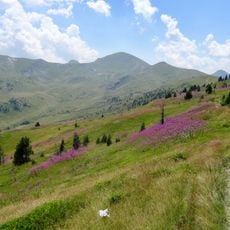
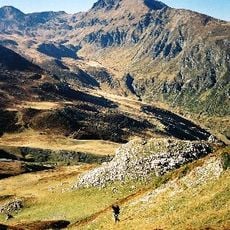
A trail through hilly terrain reaches a valley at the southeastern base in about three hours; a steeper path then climbs roughly one and a half hours to the alpine pasture of Stani i Berdushit at 1,700 m, where the north face of the eastern summit is visible. The descent is easier via the western ridge, then down the northern slopes back to the pasture.
On the main summit lies a site called Varri i mirë ("Good Grave"), said to hold a companion of the 13th-century Sufi figure Sarı Saltık; pilgrims visit it each 7 August, though tradition holds that no one is actually buried there.
The community of curious travelers
AroundUs brings together thousands of curated places, local tips, and hidden gems, enriched daily by 92,748 contributors worldwide.