Lake Ulza, Artificial lake in Albania
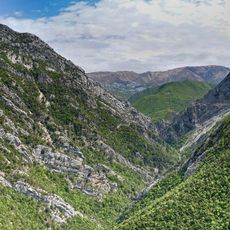
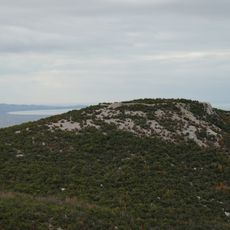
Lake Ulza is a reservoir formed by a 60-metre-high, 260-metre-long gravity dam on the Mat River, Albania's sixth-longest river. The lake covers 13.5 square kilometres to a maximum depth of 54 metres, with long arms reaching into the surrounding hills. In the middle, a narrow passage less than 200 metres wide is crossed by a footbridge and holds a small island carrying a high-voltage pylon.
The Ulza dam and power station, built with Soviet assistance, began operating in 1957, six years before the Shkopet plant downstream. It was originally named Hidrocentrali Karl Marks. In the late 1980s a railway bridge over the lake was begun but never completed; its piers remain visible. In 2013 the Turkish Kürüm Holding bought the plant.
The hydropower plant originally bore the name Hidrocentrali Karl Marks, after Karl Marx, before the lake and site took the name of Ulza at the dam. The unfinished railway bridge of the late 1980s left concrete piers standing in the central narrows, and a small island there carries a high-voltage pylon.
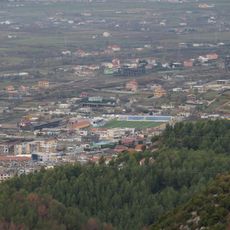
The dam wall at Ulza, 60 m high and 260 m long, is reached from the village of Ulza; the village of Uraka on the north-eastern shore is the only other settlement directly on the water. A roughly 200 m road bridge on the eastern shore gives direct access from Rrëshen to Burrel. The lake lies about 6 km south of Burrel, where the Mat enters it.
The unfinished railway bridge from the late 1980s, built by Hekurudha Shqiptare on the Rrëshen–Klos line, crossed the lake's central narrows; individual piers of the roughly 400-metre span still stand in the water. A high-voltage pylon rises from the small island in the same strait, where the lake is under 200 metres wide.
The community of curious travelers
AroundUs brings together thousands of curated places, local tips, and hidden gems, enriched daily by 94,382 contributors worldwide.