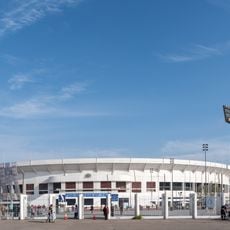
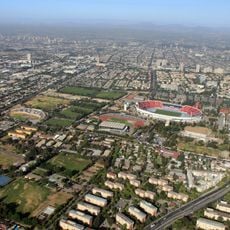
Campos de Sports de Ñuñoa, Sports stadium in Santiago, Chile
Campos de Sports de Ñuñoa was a multi-use stadium in Santiago, Chile, with a football pitch oriented east–west, an athletics track, a velodrome, tennis courts and a children's playground. Its cement stands were expanded for the 1926 South American Championship, adding 6,000 seats and boxes above the tribunes.
The stadium was founded in 1918 when philanthropist José Domingo Cañas provided land to promote sporting activities. It served as home to the Chilean national football team until a larger stadium was built in 1938.
The ground's name comes from the Ñuñoa district and the streets José Domingo Cañas and Campos de Deportes that still bound the site. Its football pitch ran east to west, against today's FIFA layout. From 1928 Colo-Colo played home matches here, and in April 1931 two games against Hajduk Split drew crowds that pushed the club to plan a stadium of its own.
The grounds lay between today's José Domingo Cañas and Campos de Deportes streets in Ñuñoa, east of central Santiago. The football pitch ran east to west, against current FIFA convention. In 1933 gravel was spread on the surrounding land to prevent winter mud, and a fence was put up to separate the stands from the pitch.
The football pitch was laid out east to west, contrary to the orientation FIFA later imposed. In 1926, ahead of the South American Championship, concrete stands were raised and 6,000 seats added, with 2,400 more on each side and boxes built above the cement tribunes.
The community of curious travelers
AroundUs brings together thousands of curated places, local tips, and hidden gems, enriched daily by 94,516 contributors worldwide.