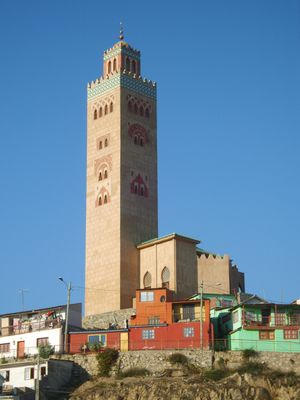
Coquimbo Mosque, Cultural center and mosque in Coquimbo, Chile
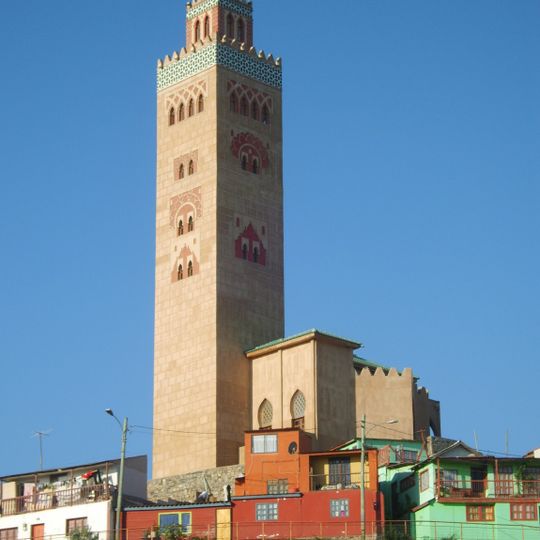
The Coquimbo Mosque is an Islamic prayer and cultural center in the Chilean coastal city of Coquimbo, with two prayer halls, a library, and exhibition spaces. The building is organized around a central courtyard that divides it into several areas open to both worshippers and visitors.
Construction started in 2004 under architect Faissal Cherradi and was finished in 2007 with support from Morocco. The project grew out of a broader effort to build closer ties between Morocco and Chile.
The complex is named after King Mohammed VI of Morocco and was promoted by ambassador Abdelhadi Boucetta. Its library holds texts in Spanish, Arabic and other languages and doubles as a conference room, while the museum shows Moroccan and Chilean painting, sculpture, photography, pottery, fabrics, jewellery and musical instruments.
The mosque sits on a hill in a central part of the city and can be reached on foot from the town center without much difficulty. Outdoor areas and gardens are generally open to walk through, and modest clothing is recommended for those who want to enter inside.
The building was designed after the Kutubiyya Mosque in Marrakesh, making it one of the few North African-inspired places of worship in South America. Some of the interior fittings, including woodwork and tiles, were brought directly from Morocco.
The community of curious travelers
AroundUs brings together thousands of curated places, local tips, and hidden gems, enriched daily by 92,585 contributors worldwide.