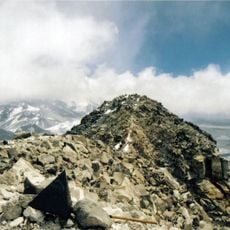
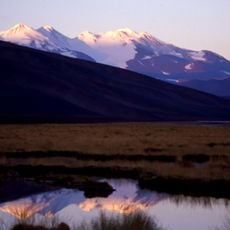
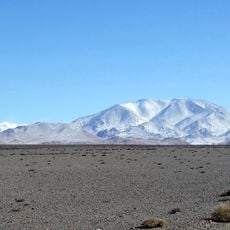
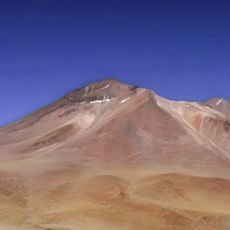
Incapillo, Volcanic caldera in La Rioja Province, Argentina.
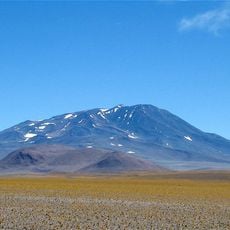
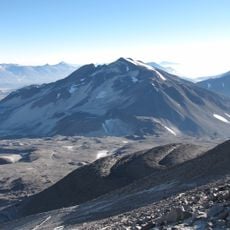
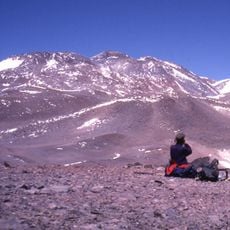
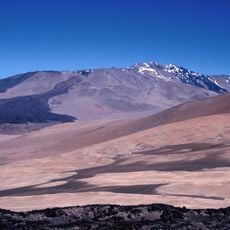
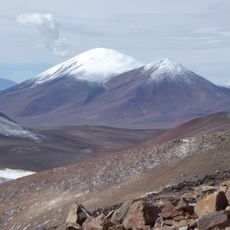
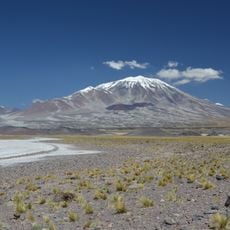
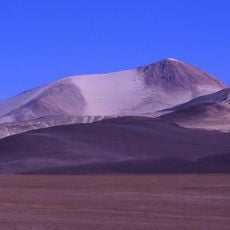
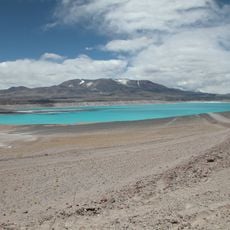
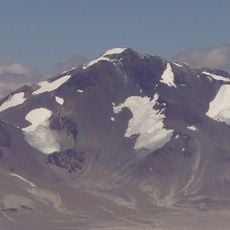
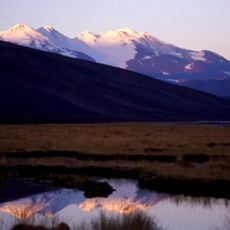
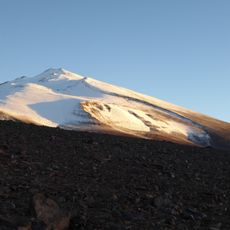
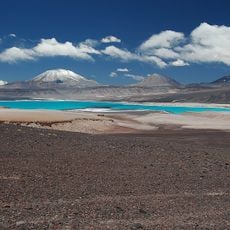
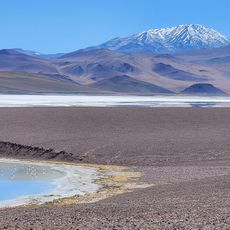
Incapillo is a 5 by 6 km caldera in La Rioja Province, Argentina, at an elevation of about 5,750 m, the highest caldera formed by explosive volcanism in the world. Its walls, up to 250 m high and about 400 m deep, consist largely of pumice-rich Incapillo ignimbrite. Forty lava domes, 100 to 600 m tall, surround it in a northwest–southeast pattern, and the Laguna Corona del Inca lies beside an altered dome in the centre.
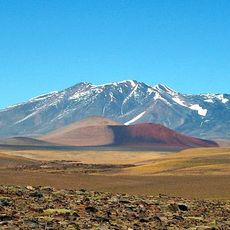
Incapillo's caldera formed when the Incapillo ignimbrite erupted 0.52 ± 0.03 and 0.51 ± 0.04 million years ago, producing about 20.4 cubic kilometres of pumice-rich deposit and a 5 by 6 kilometre depression. Volcanism in the area began after activity in the Maricunga Belt, 50 kilometres west, ceased six million years ago, building Monte Pissis, Cerro Bonete Chico and Sierra de Veladero. Later eruptions placed about 40 lava domes around and inside the caldera, and a debris flow occurred in the Sierra de Veladero.
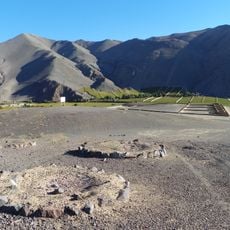
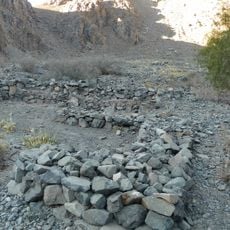
The name Incapillo means 'Crown of the Inca' in Quechua, and the caldera is also called Corona del Inca or Bonete caldera. Pre-Hispanic peoples visited the surrounding peaks, and the crater is now promoted as a tourist destination, with visits possible between December and April.
Reaching this location requires specialized mountaineering equipment and good physical condition due to the extreme altitude. Visitors should prepare for remote conditions and be ready for thin air at such heights.
Within the caldera sits a high-altitude lake positioned next to an altered lava dome. This arrangement suggests that heat may still be active beneath the surface today.
The community of curious travelers
AroundUs brings together thousands of curated places, local tips, and hidden gems, enriched daily by 93,428 contributors worldwide.