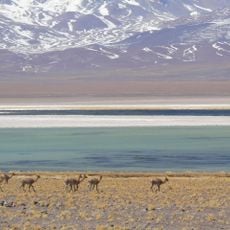
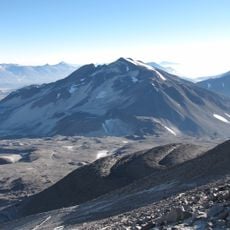
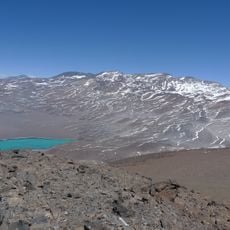
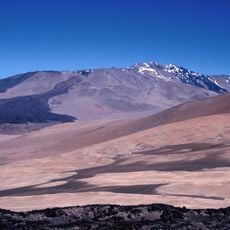
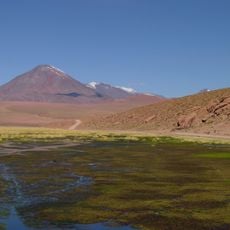
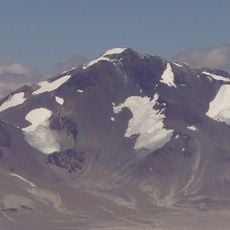
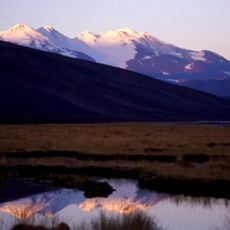
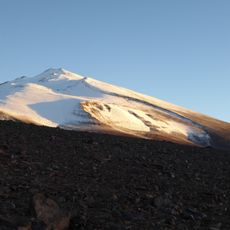
Tipas, Complex volcano in western Argentina.
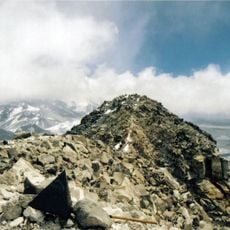
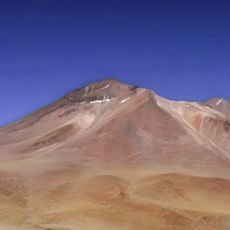
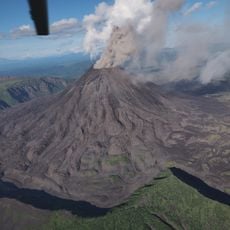
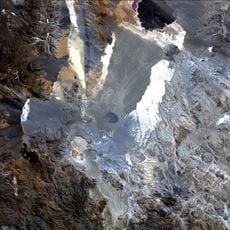
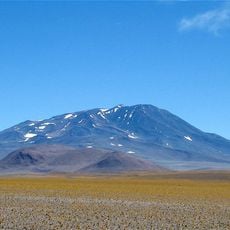
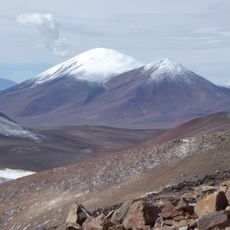
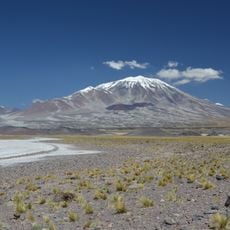
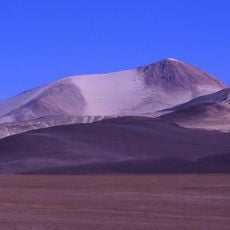
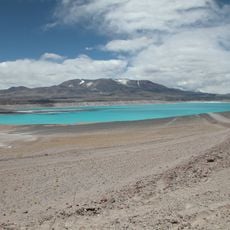
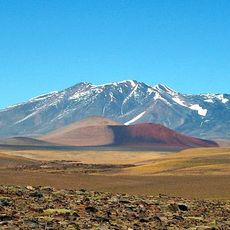
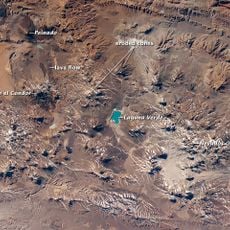
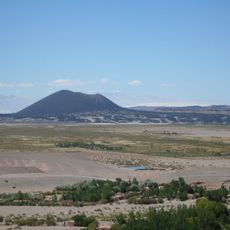
Tipas is a volcano in western Argentina that rises to approximately 6,660 meters (21,850 feet) elevation. The summit and slopes display multiple craters, cones, domes, and ancient lava flows that cover the mountainside.
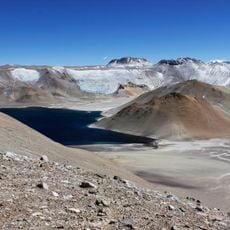
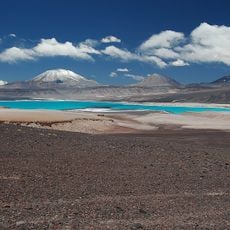
The Tipas-Cerro Bayo complex was active between 2.9 and 1.2 million years ago, erupting dacites and rhyolites. De Silva and Francis (1991) considered the volcano last active in the Holocene, and fumarolic activity has been reported. In 2013 crater lakes smelling of sulfur were reported. The massif was renamed for Austrian geologist Walther Penck, who surveyed the area methodically between 1912 and 1914.
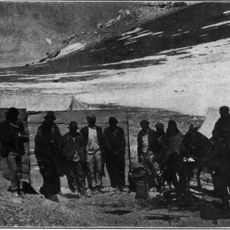
The name Tipas was reassigned by Tucumán mountaineer Orlando Bravo to honour Austrian geologist Walther Penck (1888–1923), who first surveyed the area methodically between 1912 and 1914. Older Argentine military geographic maps had swapped the toponyms, so the massif was long mislabelled Nacimientos or Cazadero.
The area is remote with minimal infrastructure, so visitors should arrange transportation and supplies well in advance. Proper preparation is essential for visiting this high-altitude region.
The name Tipas was reassigned by Tucumán mountaineer Orlando Bravo to honour Austrian geologist Walther Penck (1888-1923), who surveyed the area methodically between 1912 and 1914. Earlier Argentine military maps had transposed the toponyms, so the massif was long mislabelled Nacimientos or Cazadero.
The community of curious travelers
AroundUs brings together thousands of curated places, local tips, and hidden gems, enriched daily by 93,468 contributors worldwide.