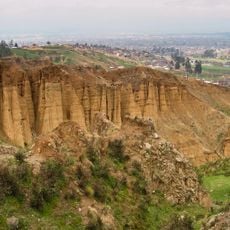
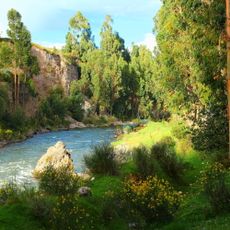
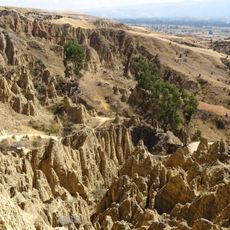
Sima Pumacocha, Pit cave in Laraos District, Yauyos Province, Peru.
Sima Pumacocha is a limestone cave in Laraos District, Yauyos Province, with three entrances (SP1, SP2, SP3) that lead into separate passages before joining underground. SP1 contains the deepest shaft in the Andes at 282 m, SP2 leads to the 113 m Ammonite Shaft, and SP3 is a 120 m shaft. The explored passages total 1,427 m and end at a gravelled sump 638 m below the entrance.
The cave system was first explored beginning in 2001 and held the record as South America's deepest explored cave for five years until another system surpassed it. This achievement marked an important milestone in regional cave exploration.
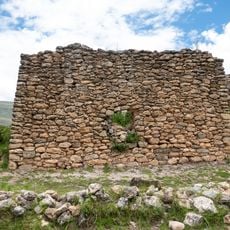
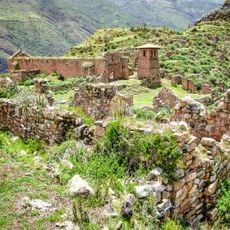
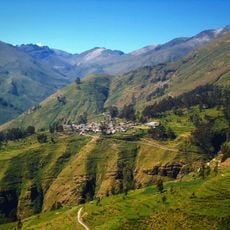
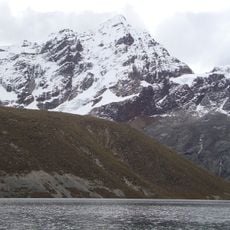
The name combines Quechua puma (cougar) and qucha (lake), with sima from Spanish for abyss. Local herders still keep sheep, llamas and alpacas in the Pumaqucha valley, and stone huts stand along the dirt road serving nearby active and abandoned mines.
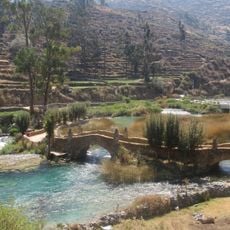
The cave lies in the Pumaqucha valley, reached by a dirt road serving nearby mines; stone huts used by herders dot the valley. The three entrances (SP1, SP2, SP3) are grouped within 90 m of each other, but each leads to independent passages before joining underground. A small concrete canal meant to divert the lake outfall is usually broken, so the active sinkpoint SP1 is often flooded and only enterable after local repairs.
In the 113-metre-deep Ammonite Shaft, fossil ammonites up to 20 cm across are visible in the walls. The explorers named the shaft after them; the limestone belongs to the Cretaceous Jumasha Formation.
The community of curious travelers
AroundUs brings together thousands of curated places, local tips, and hidden gems, enriched daily by 92,783 contributors worldwide.