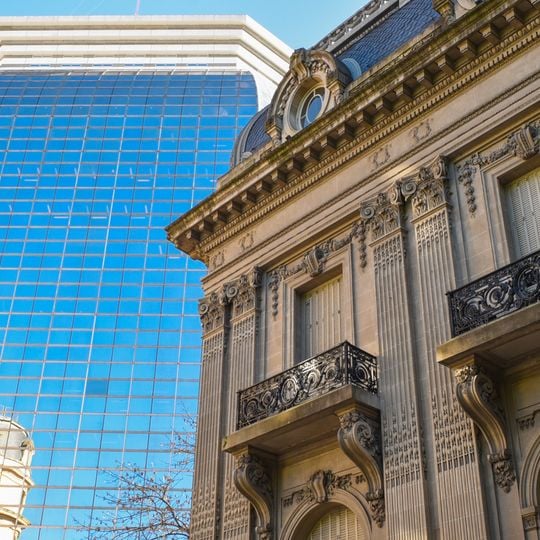
San Martín Palace, Ceremonial palace of the Foreign Ministry in Retiro, Buenos Aires, Argentina
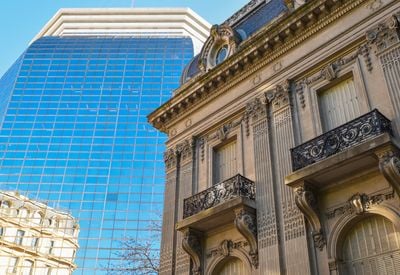
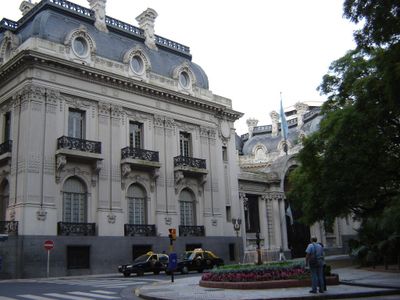
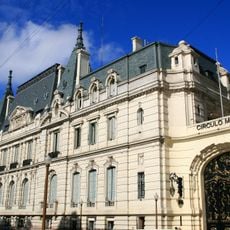
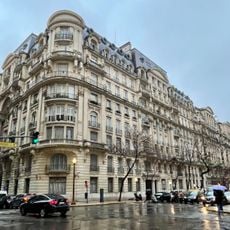
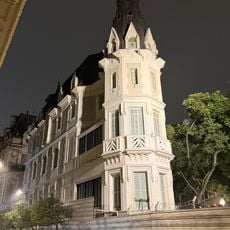
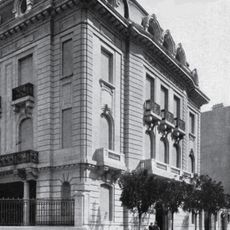
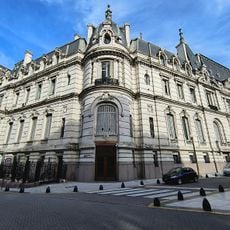
San Martín Palace is a Beaux-Arts palace facing Plaza San Martín in Retiro, Buenos Aires. Its pale grey facades are clad in stone-like material, with fluted pilasters and ornate capitals carrying a projecting cornice, above which sits a slate mansard roof with round dormer windows. Tall windows with louvred shutters open behind wrought-iron balconies on carved stone corbels, and the ground floor is banded in rustication.
Designed by Alejandro Christophersen in 1905 for Mercedes Castellanos de Anchorena, the palace was built from 1909 and inaugurated by the Anchorena family for the centenary of Argentine independence. Known as the Palacio Anchorena for the twenty years it belonged to the family, it was bought by the Argentine government in 1936 and became the seat of the Ministry of Foreign Relations, renamed Palacio San Martín. A new ministry building opened in 1993, leaving the palace as the ceremonial headquarters; it was declared a national historic monument in 1994.
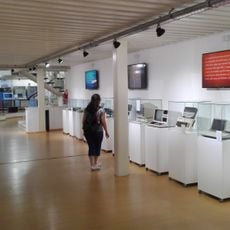
The palace owes its name to Plaza San Martín, which it faces in Retiro; until 1936 it was popularly called Palacio Anchorena, after the family that commissioned it. Today it holds the Museum of Argentine Diplomacy and a library on international law and the history of international relations. Its rooms display 20th-century works by Antonio Berni, Lino Enea Spilimbergo, Pablo Curatella Manes and Roberto Matta, alongside a pre-Columbian art collection.
The palace faces Plaza San Martín in Retiro and is reached from Avenida Santa Fe or Avenida del Libertador. It is not a residence but the ceremonial headquarters of the Foreign Ministry, so it is not open for regular visits; access is limited to official events and occasional guided openings. The Museum of Argentine Diplomacy operates inside.
The palace houses the Museum of Argentine Diplomacy and a library devoted to international law and the history of international relations. Its rooms also hold a pre-Columbian art collection and 20th-century works by Antonio Berni, Pablo Curatella Manes, Lino Enea Spilimbergo and Roberto Matta. It has been a national historic monument since 1994.
The community of curious travelers
AroundUs brings together thousands of curated places, local tips, and hidden gems, enriched daily by 92,744 contributors worldwide.