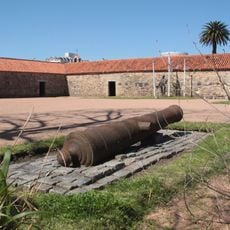
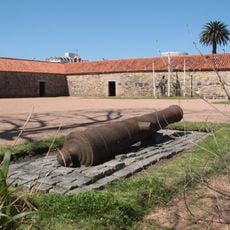
Cerro Pan de Azúcar Native Fauna and Flora Breeding Station, Nature park in Piriápolis, Uruguay.
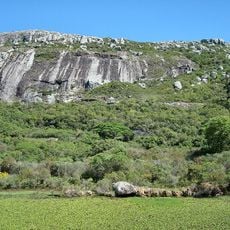
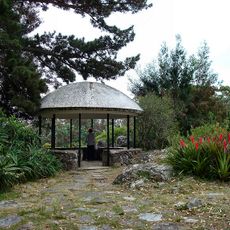
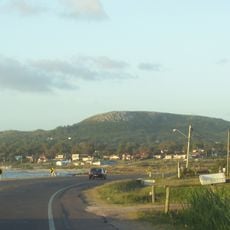
The Cerro Pan de Azúcar Native Wildlife Breeding Station covers 86 hectares on the hillside of Pan de Azúcar hill, a 389.5 m peak near Piriápolis. Its enclosures hold some 250 animals of 53 Uruguayan species, set among native trees and shrubs, with fences built into the slope and vegetation rather than rows of bars.
The station was created in 1980 at the request of Maldonado's mayor Juan César Curutchet and the naturalist Tabaré González Sierra. It occupies a hillside where, a century earlier, Piriápolis founder Francisco Piria had opened a granite quarry to supply his new resort. Remains of that activity, such as paths and walls, were adapted; a standing wall became the Serpentarium. The first animals were herons, black-necked swans and a puma brought from the Durazno zoo.
The station is a teaching centre: guided tours and school and scout groups visit year-round, and in 2003 it was declared a national monument and natural site of tourist interest. Male rheas incubate eggs each spring, and the chicks are called charabones.
The entrance sits 220 m from a turn-off on National Route 37, about 6.1 km from the Piriápolis beaches; from the Rambla de los Argentinos take Avenida Artigas, which continues as Route 37. The 86-hectare grounds climb the hillside, so expect slopes along the circuit of paths. Guided walks and school programmes run through the year.
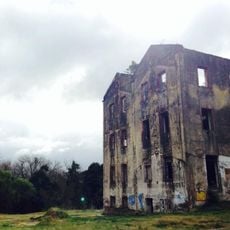
The serpentarium occupies a wall left standing from Francisco Piria's 19th-century granite quarry, which supplied stone for Piriápolis. Inside are Uruguay's main reptiles, including several freshwater turtles and snakes, while a broad-snouted caiman is kept in an outdoor enclosure.
The community of curious travelers
AroundUs brings together thousands of curated places, local tips, and hidden gems, enriched daily by 92,751 contributors worldwide.