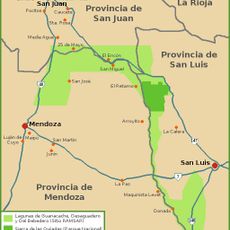
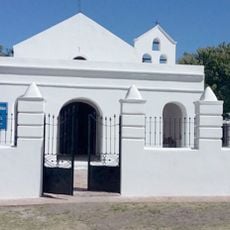
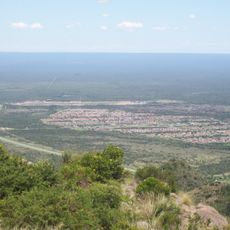
Inti Huasi, Lava dome in Coronel Pringles Department, Argentina.
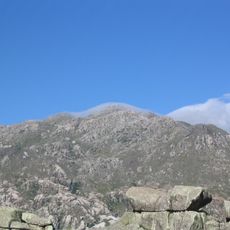
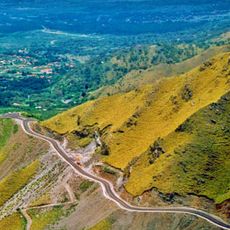
Inti Huasi is a lava dome in the central mountain range of San Luis, distinguished by its characteristic andesitic rock formations and volcanic geological structures. The formation displays clear evidence of volcanic activity and rises prominently in the surrounding landscape.
The cave's scientific record begins in 1875, when German geologist Luis Brackebusch mentioned it in his survey of the San Luis ranges; at that time the shelter served as a corral for cattle, goats and horses, whose dung left a thick sediment. In 1948 road work on the slope of Intihuasi hill exposed stone tools, bone implements, rock paintings and human remains, and Alberto Rex González directed excavations from 1951. Radiocarbon dates from the lowest layers, the first such tests run in Argentina, placed the earliest human settlement at 6200 BC.
The name Inti Huasi comes from Quechua, inti (sun) and wasi (house), but it was given after the 17th-century Spanish conquest: Christian missionaries used Quechua for catechism, so the name does not belong to the Henia-Kamiare people who created the site. The original name is unknown.
The site is located roughly 20 kilometers from La Carolina in a mountainous area that requires basic preparation before visiting. Plan ahead and bring appropriate gear, as the terrain is rugged and conditions can be challenging depending on the season.
In 1948, while a road to the site was being cut in front of the Intihuasi hill slope, a large number of stone objects, bone tools, rock paintings and human remains came to light. The find led to Alberto Rex González directing the excavations in 1951.
The community of curious travelers
AroundUs brings together thousands of curated places, local tips, and hidden gems, enriched daily by 92,638 contributors worldwide.