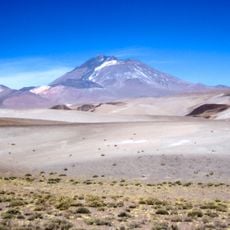
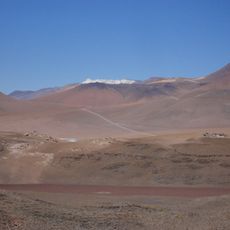
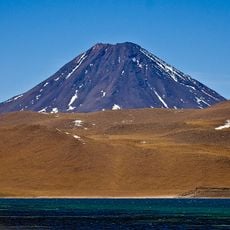
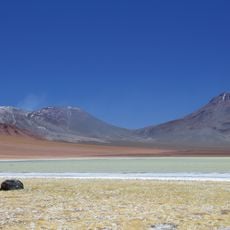
Pular, Stratovolcano in Antofagasta Region, Chile.
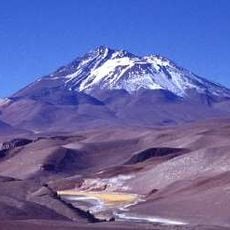
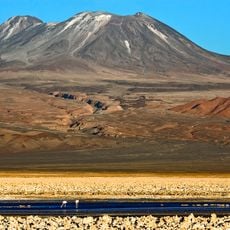
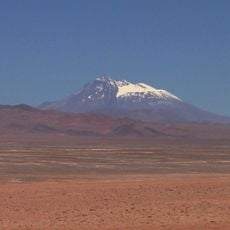
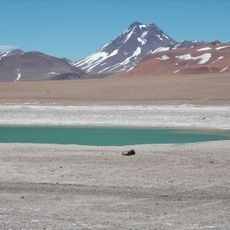
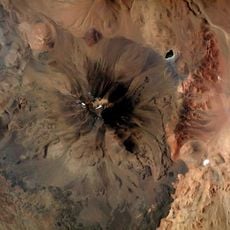
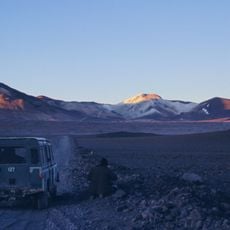
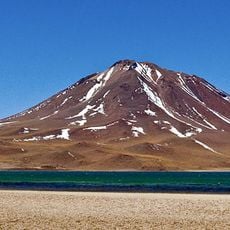
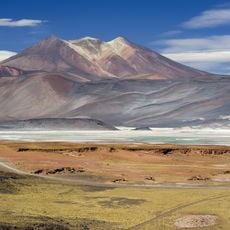
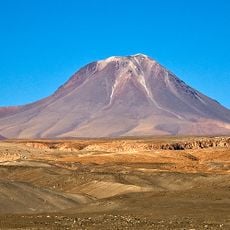
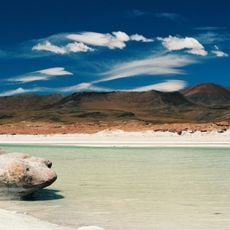
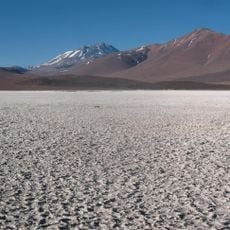
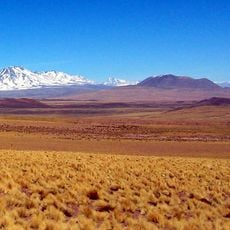
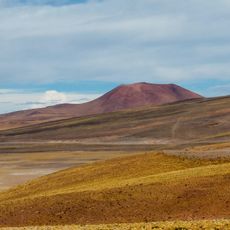
Pular is a volcanic massif in the Antofagasta Region of northern Chile, close to the Argentine border. It forms a 12-kilometre ridge running northeast to southwest, from the 6,233-metre Pular to the 5,958-metre Pajonales, with a further 5,732-metre Pajonales peak on the western side. The edifice is built of andesitic and dacitic lava flows and domes, with more than nine craters, some holding crater lakes such as Laguna Pajonales. The mountains are largely unglaciated today; moraines from the Last Glacial Maximum girdle the massif.
The older volcanic sections formed about 3.9 million years ago, while younger volcanic cones developed around 1.8 million years ago. This long geological history shows that the volcano built itself over multiple eruption phases across millions of years.
The name Pular comes from the Kunza language and means 'The Eyebrow', reflecting how indigenous people of the region perceived this volcanic feature. This linguistic origin shows the deep connection between the local communities and the mountain landscape that surrounded them.
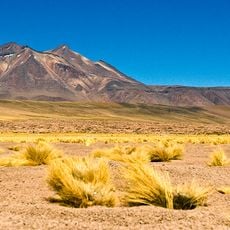
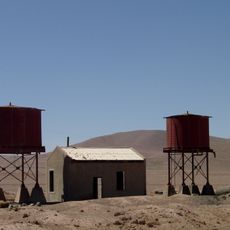
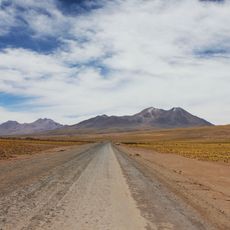
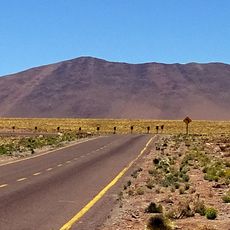
The massif is largely unglaciated today, so no glacier crossings are needed; snow disappears in summer. Access is remote, with the Monturaqui mining camp and the Salta-Antofagasta railway station southwest of the mountain, and an old Chile-Argentina path running by the Salar de Pular. Mean annual precipitation is only 40-100 mm, with intense sun and a strong day-night temperature swing. The first ascent was only in 1972.
This volcano serves as a natural watershed dividing two major salt flats: the Salar de Atacama and the Salar de Pular. This hidden hydrological role makes it an important landmark in one of the driest regions on Earth.
The community of curious travelers
AroundUs brings together thousands of curated places, local tips, and hidden gems, enriched daily by 92,775 contributors worldwide.