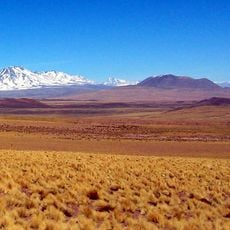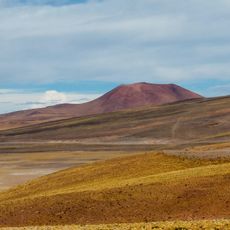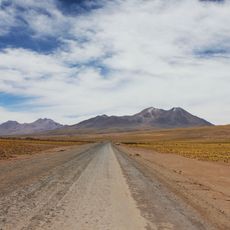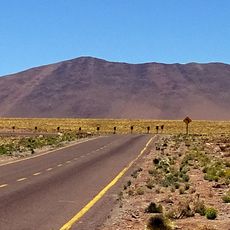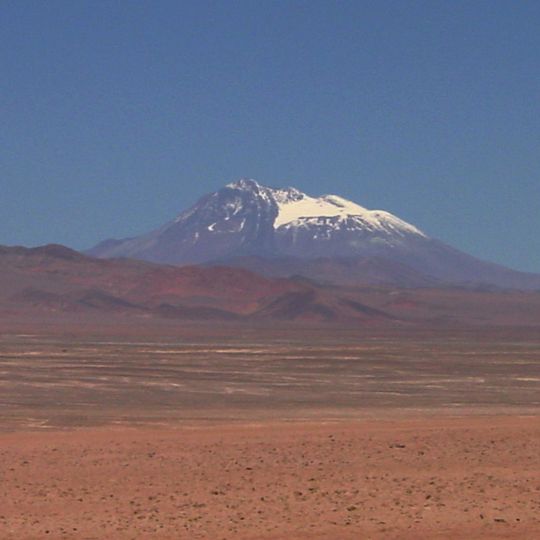
Socompa, Stratovolcano in Northern Chile
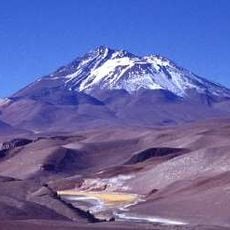
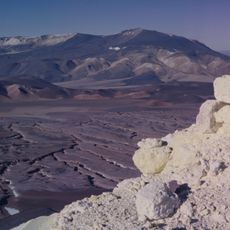
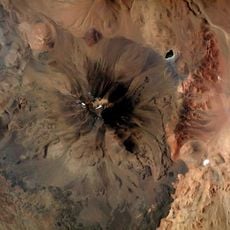
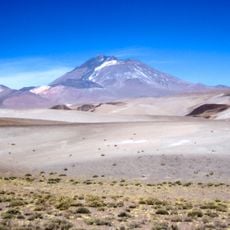
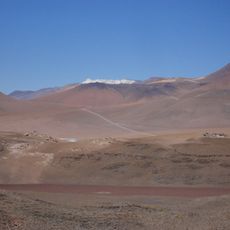
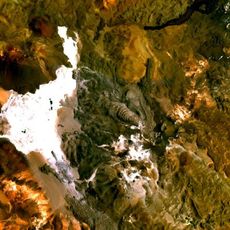
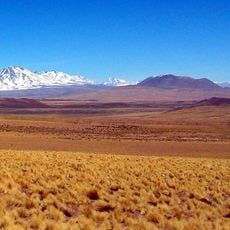
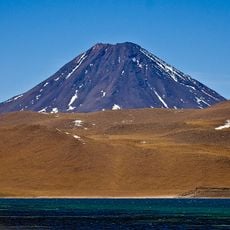
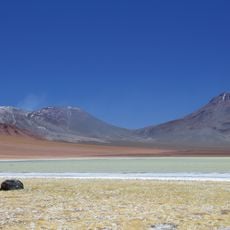
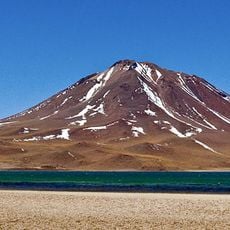
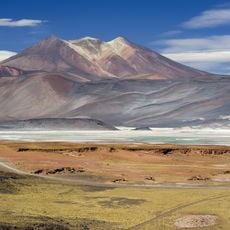
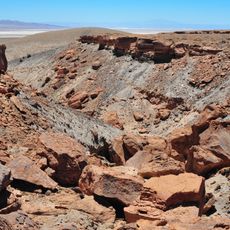
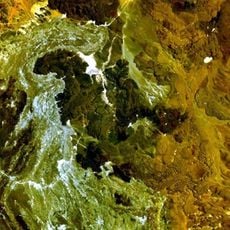
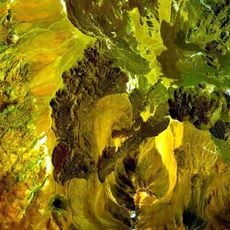
Socompa is a composite volcano on the Argentina-Chile border, 6,051 metres high, built of a central cone and several lava domes. It rises more than 2 km above the surrounding terrain and measures 16 km across. A wedge-shaped scar on the northwestern flank marks a past collapse, and a summit dome holds a crater at 5,850 metres.
The volcano formed as part of the Andean volcanic chain thousands of years ago. A major landslide occurred on its northwestern slope approximately 7,200 years ago, dispersing debris across a vast area.
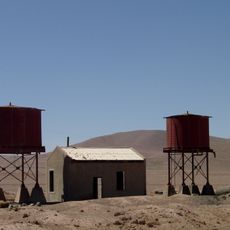
Local people regard Socompa as an apu, a mountain spirit, and Inca constructions have been reported on its slopes or summit. The name comes from Kunza, in which socke and sokor relate to "spring" or "arm of water". The Salta–Antofagasta railway crosses the border just below the volcano, and between 1940 and 1970 the Carabineros de Chile kept a post at the pass.
Access requires specialized mountaineering equipment and proper high-altitude acclimatization, as the volcano sits in a remote region of the Andes. Visitors need good physical conditioning and should allow time to adjust to the elevation before attempting ascent.
Extremophile organisms thrive in the harsh conditions of the volcano's fumaroles at elevations near 6,000 meters. These life forms demonstrate how life adapts to some of Earth's most severe environments.
The community of curious travelers
AroundUs brings together thousands of curated places, local tips, and hidden gems, enriched daily by 93,883 contributors worldwide.