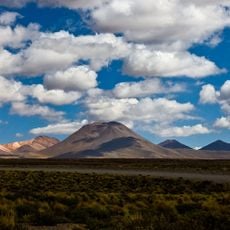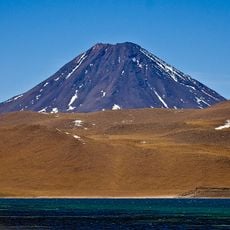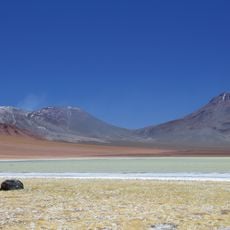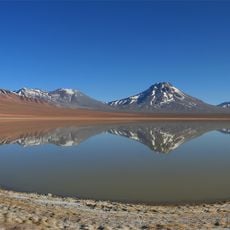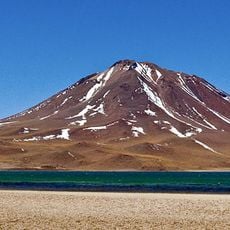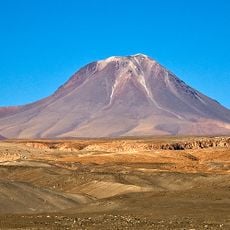
Lascar, Stratovolcano in El Loa Province, Chile.
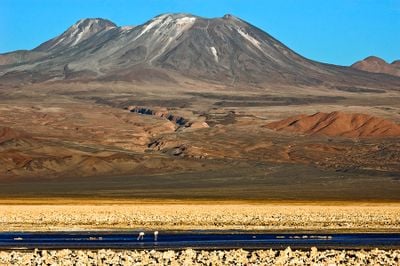
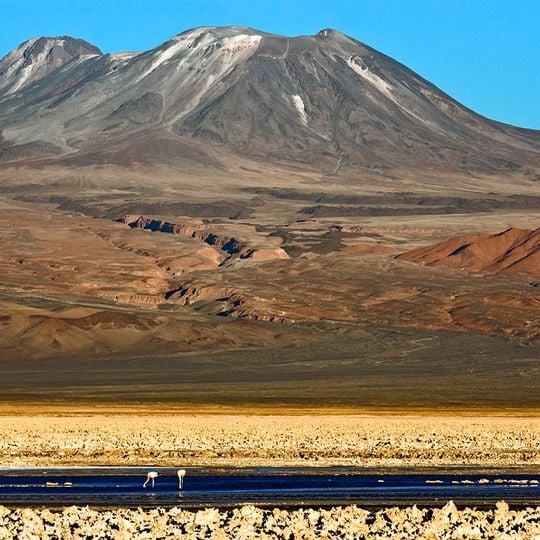
Lascar is a stratovolcano in El Loa Province, Chile, rising to 5,592 metres with two separate cones, each holding several summit craters; the westernmost crater of the eastern cone is the one currently active. Its broad, gently sloping grey-brown cone carries two rounded peaks at the top, the left slightly higher, and ridged, barren slopes that turn reddish-brown with eroded gullies near the base.
Geological evidence shows this volcano has been active for more than 56,000 years, with documented eruptions beginning in 1848. Recent events through 2023 demonstrate that this mountain remains geologically active and continues to change.
The name Lascar derives from the Atacameño word láskar or lassi, meaning tongue, thought to describe the volcano's shape. Other recorded names include Hlàscar, Ilascar, Kar Las, Laskar, Toconado and Toconao. Inhabitants of Camar regard Lascar as a protective mountain spirit, those of Talabre give it gifts as their source of water, and in Susques, Argentina, people believe snow falls when the volcano steams strongly.
Lascar lies in a remote stretch of the Antofagasta region, reached from San Pedro de Atacama (about 68 km away) or Talabre (17 km west); Chile Route 23 runs about 10 km west of the cone. Because the volcano is monitored mainly by remote sensing, check eruption and gas reports before setting out, and allow for the 5,592 m summit altitude.
The 1993 eruption, Lascar's largest in recorded history, sent ash as far as Buenos Aires. Because the volcano sits in a remote area, it is monitored mainly by remote sensing rather than by instruments on its slopes.
The community of curious travelers
AroundUs brings together thousands of curated places, local tips, and hidden gems, enriched daily by 94,231 contributors worldwide.