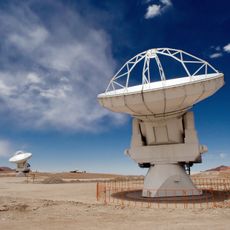
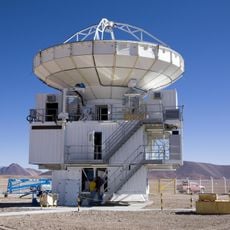
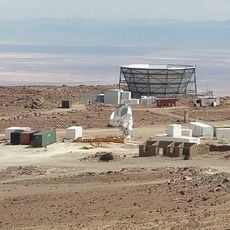
Fred Young Submillimeter Telescope, Radio telescope in Purico Complex, Chile
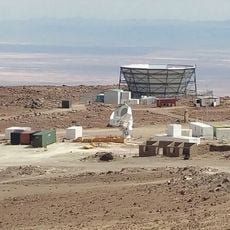
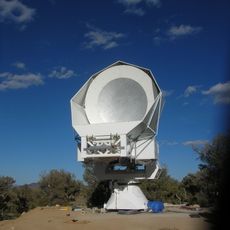
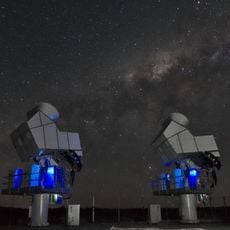
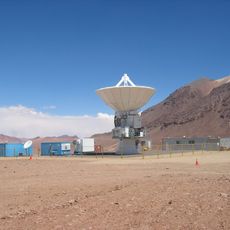
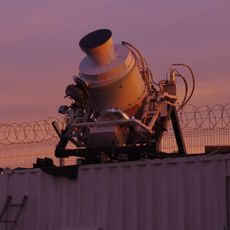
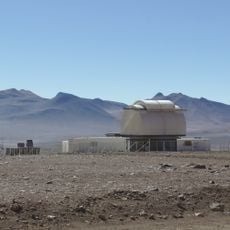
The Fred Young Submillimeter Telescope is a radio telescope with a 6-meter diameter mirror located in the Atacama Desert at over 5,600 meters elevation. The facility uses wide-field cameras and spectrometers to study phenomena such as galaxy evolution and the distribution of matter throughout the universe.
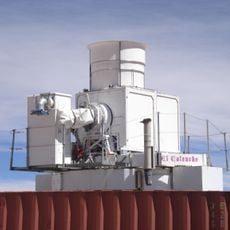
The project began as the Cornell Caltech Atacama Telescope, a proposed 25-metre instrument. After Caltech withdrew in 2014 when NSF funding failed, partners opted in 2017 for a smaller 6-metre version, CCAT-prime. Components were built by Vertex Antennentechnik in Duisburg, tested in Xanten, shipped to Chile and trucked up to the 5,612-metre summit. Renamed the Fred Young Submillimeter Telescope in 2020, it was inaugurated on 9 April 2026.
Scientists from Cornell University, German institutions, and the Canadian Atacama Telescope Consortium collaborate on this international research facility.
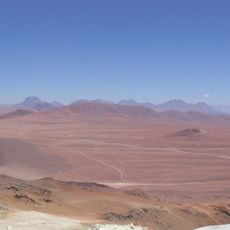
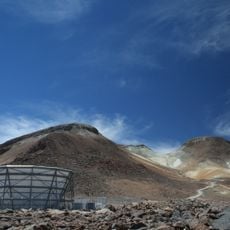
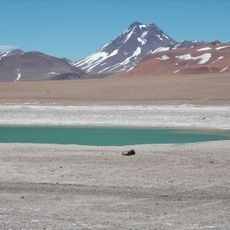
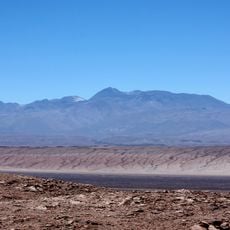
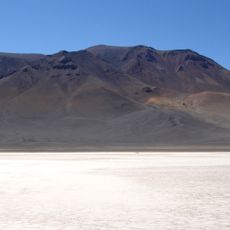
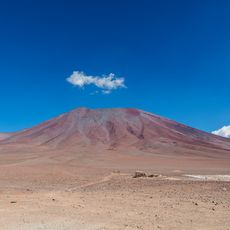
The telescope stands on the summit of Cerro Chajnantor at 5,612 m, reached by an unpaved, winding road; the disassembled parts were trucked nearly 300 miles from the coast. The site is not open to casual visitors, and the extreme altitude demands acclimatization. The University of Tokyo Atacama Observatory sits slightly higher on the same peak, about 600 m above ALMA.
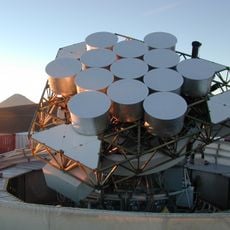
The 6-metre mirror was built by Vertex Antennentechnik in Duisburg, test-assembled at Xanten on the Lower Rhine, then shipped to South America and trucked up unpaved mountain roads to the 5,600-metre summit. Its Prime-Cam camera is designed to hold over 100,000 microwave kinetic inductance detectors, 40,000 of them in the 850 GHz module alone.
The community of curious travelers
AroundUs brings together thousands of curated places, local tips, and hidden gems, enriched daily by 93,424 contributors worldwide.