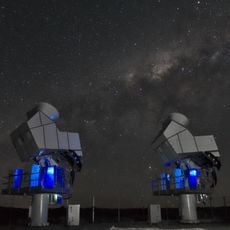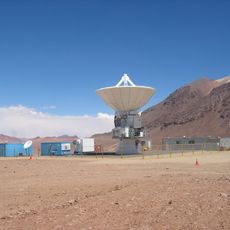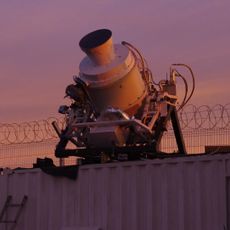
Llano de Chajnantor Observatory, Astronomical observatory complex in Antofagasta Region, Chile
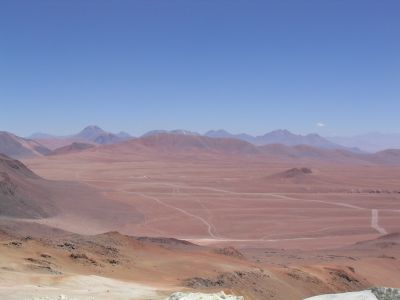
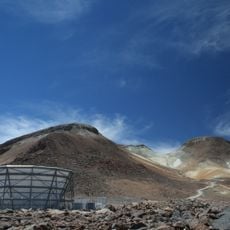
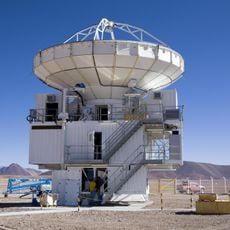
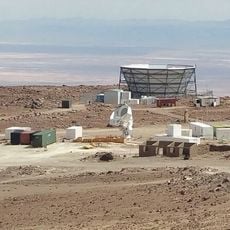
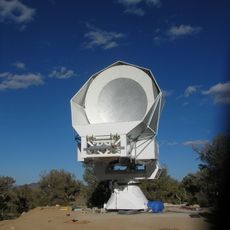
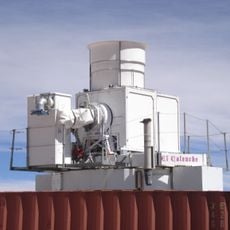
Llano de Chajnantor Observatory is a group of astronomical observatories on the Puna de Atacama at about 5,000 m, 50 km east of San Pedro de Atacama, ringed by the Purico Complex volcanoes. Its best-known instrument is ALMA, an interferometer of 54 antennas 12 m across and 12 of 7 m, working in full operation since October 2013. Nearby stand APEX, a 12 m dish installed in 2003, and, on Pampa la Bola, the 10 m ASTE and the 4 m NANTEN2.
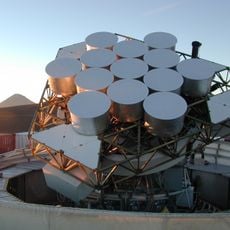
In 1999 the Cosmic Background Imager was the first radio telescope to observe from Llano de Chajnantor. ASTE arrived at Pampa la Bola in 2002, APEX was installed in 2003 and inaugurated in 2005, and NANTEN2 was moved there in 2004. ALMA has been in full operation since October 2013.
Scientists from Japan, Europe, and North America work at this facility, advancing astronomical research through international cooperation that expands knowledge about star formation and galaxy evolution. The installation contributes to Chile's position as a global center for radio astronomy and millimeter-wavelength observation.
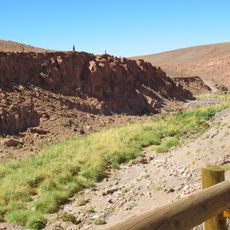
The site lies at over 4,800 m, about 50 km east of San Pedro de Atacama, and the thin air makes work hard for humans, so much ALMA activity runs from a base camp in the Salar de Atacama basin at roughly 2,900 m. The area is protected as the Chajnantor Science Reserve, and the observatory itself is not open to casual visitors.
The location provides optimal conditions for submillimeter astronomy, with exceptionally dry air present more than 300 days per year and precipitation below one millimeter. These atmospheric properties enable observations at wavelengths that would be blocked by water vapor at most other locations on Earth.
The community of curious travelers
AroundUs brings together thousands of curated places, local tips, and hidden gems, enriched daily by 93,008 contributors worldwide.