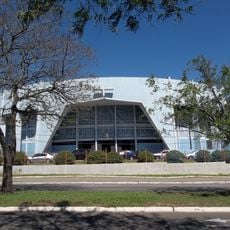
Paleontological Site Chiniquá, Paleontological excavation area in São Pedro do Sul, Brazil.
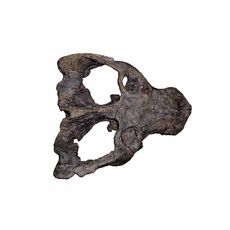
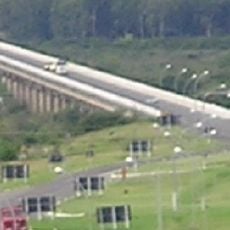
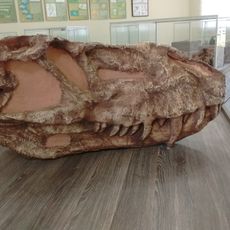
Paleontological Site Chiniquá is a large excavation area in Rio Grande do Sul that stretches across substantial terrain along federal highway BR-287. The site preserves numerous fossils from the Middle Triassic period belonging to the Santa Maria Formation, revealing evidence of extinct land animals that roamed the region.
Chiniquá was discovered in the early 20th century by researcher Antero de Almeida. In 1925, German paleontologist Bruno von Freyberg of the University of Halle-Wittenberg visited and influenced surveyor Vicentino Prestes de Almeida, born in Chiniquá in 1910, who became self-taught in fossil collection. Von Huene's 1928 expedition, accompanied by Rudolf Stahlecker, stayed two months and sent tons of fossils to Tübingen, many destroyed in a World War II bombing.
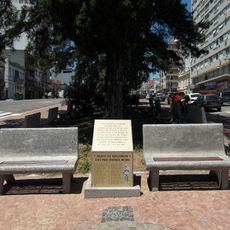
Chiniquá gave Brazilian paleontology one of its first self-taught field collectors: Vicentino Prestes de Almeida, born there in 1910, when the site was still a district of Santa Maria. After the German paleontologist Bruno von Freyberg visited in 1925, Almeida learned to collect fossils, and his finds helped bring Friedrich von Huene to the region. Von Huene named the genus Prestosuchus after him.
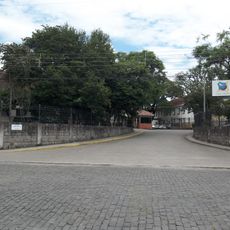
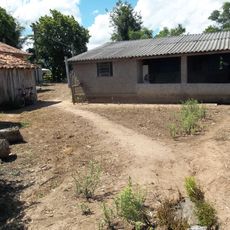
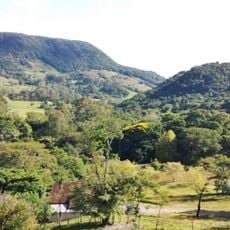
The site lies in a rural area on the edge of BR-287, about 70 km west of Santa Maria, with heavy vehicle traffic on the road. It is abandoned, with no signs, panels, replicas or statues, and no project to turn it into a tourist spot. Access is unmarked and conditions are unmanaged, so visitors should plan for an open roadside area rather than a prepared attraction.
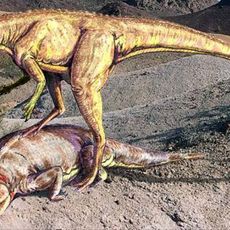
The predator Prestosuchus chiniquensis was named by Friedrich von Huene after Vicentino Prestes de Almeida, the self-taught Chiniquá surveyor born there in 1910 whose finds drew von Huene to the site. The genus honours a local collector, not a landowner.
The community of curious travelers
AroundUs brings together thousands of curated places, local tips, and hidden gems, enriched daily by 92,813 contributors worldwide.