Arquivo Público, Historic archive in Porto Alegre, Brazil
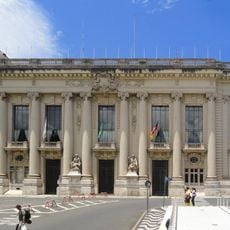
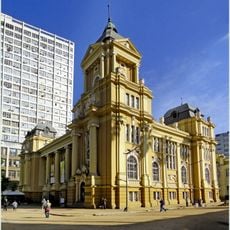
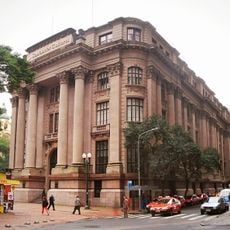
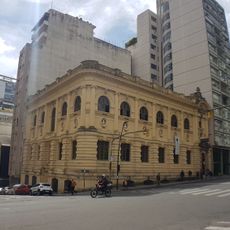
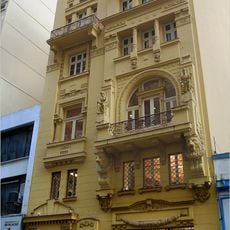
Arquivo Público is a state archive on Riachuelo Street 1031 in Porto Alegre, housed in three pavilions. The first, begun in 1910 to a design by French architect Maurice Gras and built under Affonso Hebert, was completed on 5 July 1912. Its street facade has four storeys, a brown stone-imitation ground floor with barred openings, grey stone-dust upper floors with plain pilasters between square windows, and a central pediment bearing the institution's name.
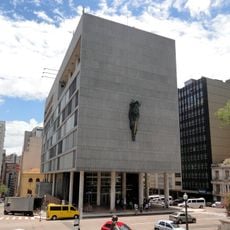
Created on 8 March 1906 by Decree 876, the archive opened seven days later in the ground floor of the Escola Complementar at Duque de Caxias and Marechal Floriano streets. It moved to the Bailante building before occupying its first purpose-built pavilion, completed on 5 July 1912 to a design by Maurice Gras and executed by Affonso Hebert. A second wing followed in 1919, and a third pavilion, built between 1948 and 1950, only passed to the archive in 1999 after housing the Colégio Júlio de Castilhos and the Junta Comercial.
The collections reveal how Porto Alegre grew through immigration and social change, with documents showing the arrival of different communities and their impact on the city. Visitors can trace these stories through records that shaped the region's identity.
The archive opens during regular business hours and staff members assist visitors in finding specific documents and historical records. It helps to plan ahead which topics or time periods interest you, so staff can guide you effectively to the right collections.
The archive holds original manuscripts and photographs documenting the arrival of European settlers and the founding of Porto Alegre's earliest communities. These materials offer direct glimpses into the lives of the first people who shaped the city.
The community of curious travelers
AroundUs brings together thousands of curated places, local tips, and hidden gems, enriched daily by 92,814 contributors worldwide.