Piratini palace, Government office in Porto Alegre, Brazil
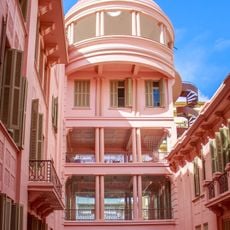
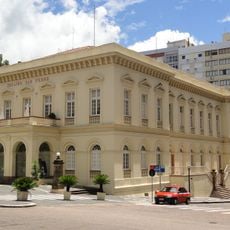
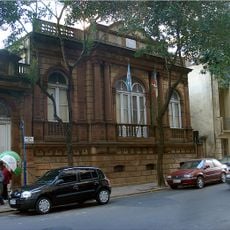
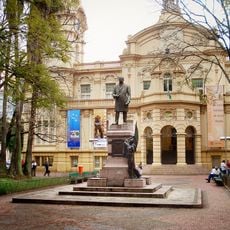
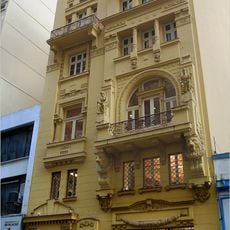
The Palais Piratini is a government office in Porto Alegre featuring neoclassical architecture defined by columns, balconies, and sculptures. The main facade displays sculptures representing Agriculture and Industry, reflecting the region's economic foundation.
The Clay Palace, built on this site in 1773, served as government seat until its demolition in 1896. Júlio de Castilhos ordered a new palace; Affonso Hebert's project had its cornerstone laid on 27 October 1896, but work stalled. In 1909 Carlos Barbosa suspended it and Maurice Gras designed the current building, whose second cornerstone was laid on 20 September 1909. It was partially occupied on 16 May 1921 and finished only in the 1970s.
The palace displays murals that tell the story of Rio Grande do Sul's founding and early settlement through art. These paintings bring the region's past to life for visitors walking through the halls.
Guided visits run Monday to Friday, 9am to 5pm, in Portuguese, English and Spanish. The weekly tour covers the entrance hall, the main staircase, the Negrinho do Pastoreio Hall and two antique cars: a 1919 Ford Model T and a 1929 German car. Other rooms stay closed on the regular route.
The Crioulo shed in the palace grounds dates from 1971, not from the 1950s, and was built to welcome visitors with demonstrations of traditional gaucho cuisine and culture. The garden also holds an Egyptian-themed fountain and a sculpture of Negrinho do Pastoreio by Vasco Prado.
The community of curious travelers
AroundUs brings together thousands of curated places, local tips, and hidden gems, enriched daily by 92,780 contributors worldwide.