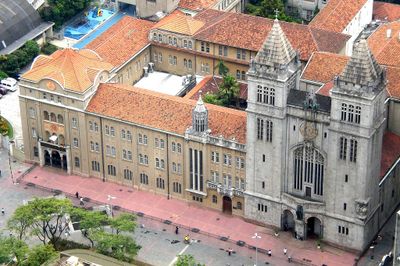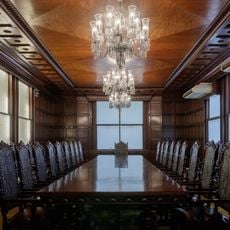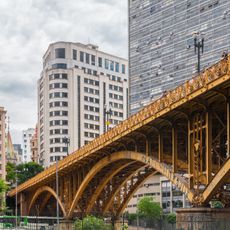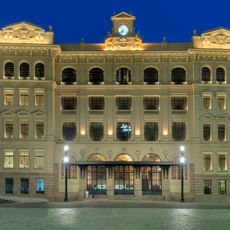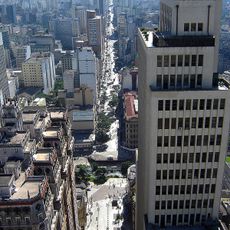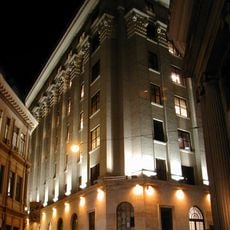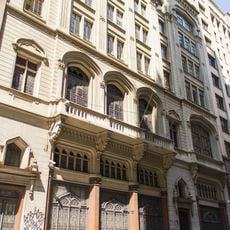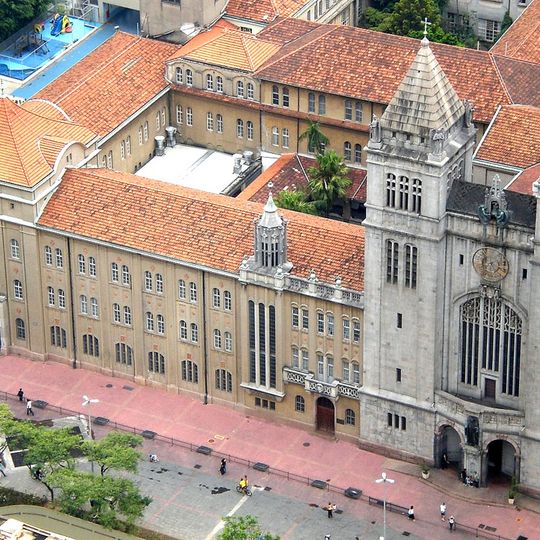
Mosteiro de São Bento, Benedictine abbey in Sé District, São Paulo, Brazil.
Mosteiro de São Bento is a Benedictine abbey in the Sé district of São Paulo, whose Neo-Romanesque church was built between 1910 and 1922 to a design by German architect Richard Berndl. The interior decoration was planned by the Dutch monk Adelbert Gresnicht of the Beuron Art School, with medallions by German painter Thomaz Scheuchl and twelve apostle sculptures carved between 1919 and 1922 by Belgian sculptor Adrien van Emelen. The high altar is made of marble from the Lake Maggiore region of Italy.
The founder chose the site in 1598 for its elevation and distance from the flood zones along the Anhangabaú and Tamanduateí rivers. The current church arose between 1910 and 1922, replacing an earlier colonial structure that had become too small for the growing community.
The name honors Benedict of Nursia, whose rule has shaped the community for over four hundred years and whose Latin chants visitors can still hear today. Monks lead a withdrawn life, yet their presence shows in the quiet corridors and the bookshop where they sell religious texts and handmade products.
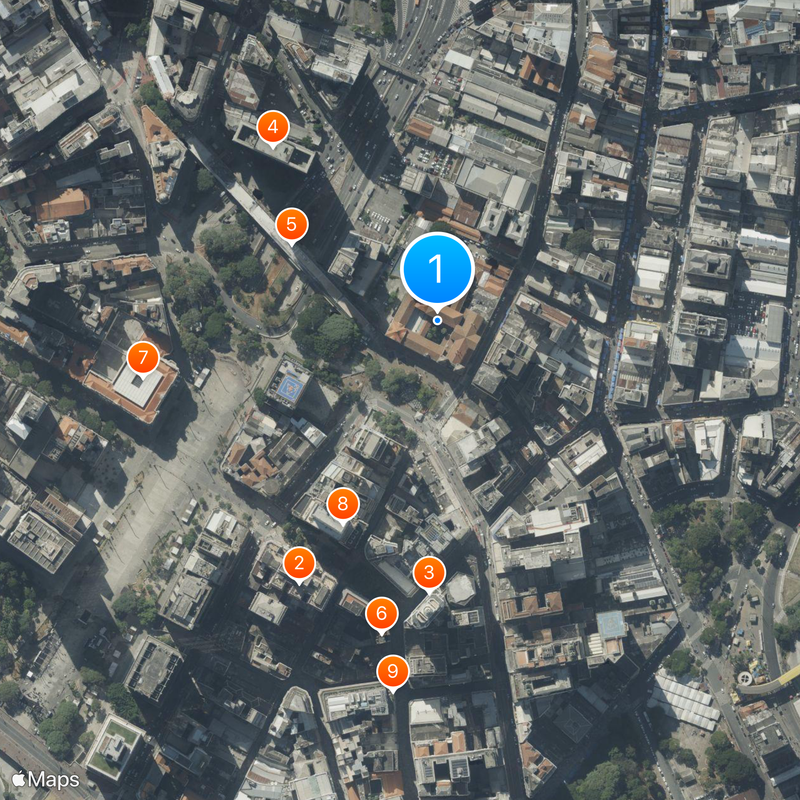
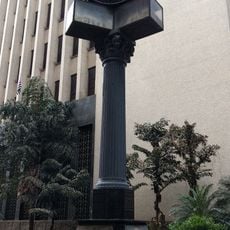
The monastery stands at Largo de São Bento in the Sé district, between the sites of the old Anhangabaú and Tamanduateí rivers. The German clock installed in 1921 rings a carillon of six tuned bells on the hour and fractions of the hour, so time a visit to hear it. The Walcker organ from 1954 has more than 6,000 pipes.
The German-made clock installed in 1921 was considered the most accurate in São Paulo until quartz clocks appeared. Its carillon has six tuned bells that sound the hours and fractions. The church organ, also German, dates from 1954 and has more than 6,000 pipes.
The community of curious travelers
AroundUs brings together thousands of curated places, local tips, and hidden gems, enriched daily by 92,788 contributors worldwide.