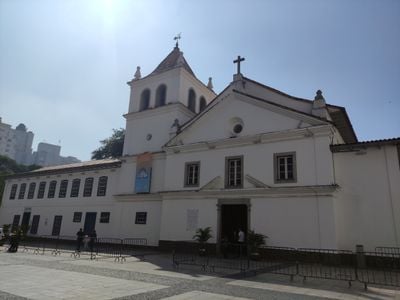
Pátio do Colégio, Mission station and archaeological site in central São Paulo, Brazil.
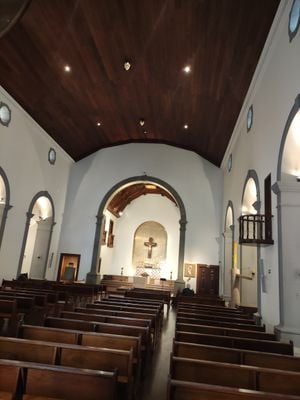
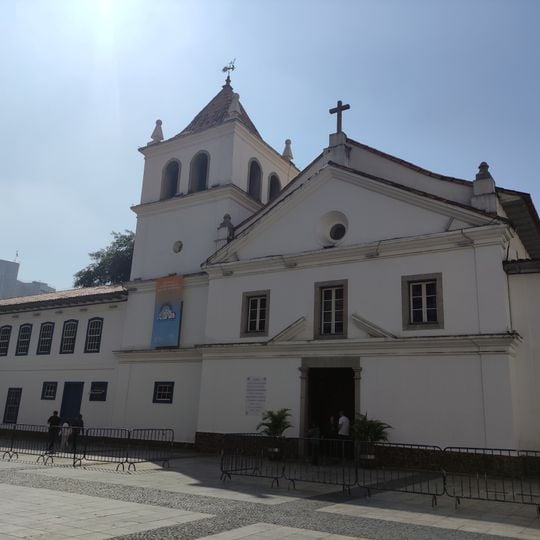
Pátio do Colégio comprises several buildings around a central courtyard, including a white-walled church, a small museum, and an exhibition space in downtown São Paulo. The buildings follow a colonial design with arches and tile roofs, while archaeological remains from the sixteenth century lie visible beneath the main plaza.
Jesuit priests founded here the first school and chapel in 1554, marking the starting point of São Paulo as a settlement. The buildings were reconstructed in the twentieth century following historical plans, after earlier structures were lost to urban changes.
The Bênção das Rosas ceremony, introduced by the Jesuits in 1583, is still held here, and roses were brought to Brazil by Anchieta between 1560 and 1570. The complex also hosts concerts by orchestras and choirs, folkloric performances, and children's workshops on art and history. The Padre Antônio Vieira Library specializes in Brazilian and Jesuit history, with six thousand catalogued titles and seven thousand more in progress.
The complex sits on a hilltop in the Centro Histórico, between the sites of the old Tamanduateí and Anhangabaú rivers, and the square in front serves as the entrance point. The church, the Anchieta Museum with its six rooms, the Tibiriçá Crypt and the Padre Antônio Vieira Library occupy the same block, so allow time to move between them. The museum holds around seven hundred objects; the library catalogues six thousand titles on Brazilian and Jesuit history.
Glass panels in the courtyard floor reveal foundation stones and wall fragments from the sixteenth century, allowing visitors to examine the original rammed-earth construction techniques directly below. These underground remains mark the exact spot where the city began its existence.
The community of curious travelers
AroundUs brings together thousands of curated places, local tips, and hidden gems, enriched daily by 92,784 contributors worldwide.