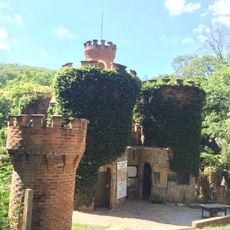
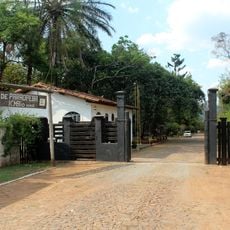
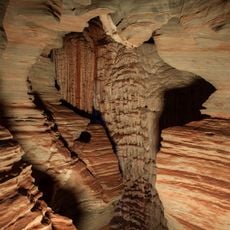
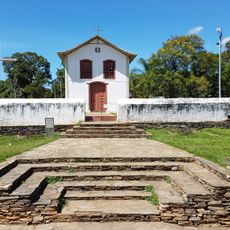
Gruta de Maquiné, Limestone cave in Cordisburgo, Brazil.
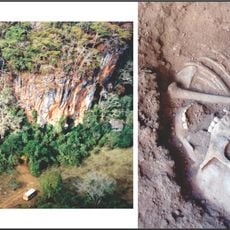
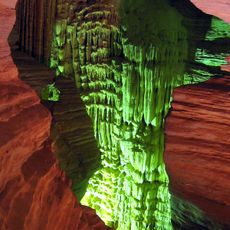
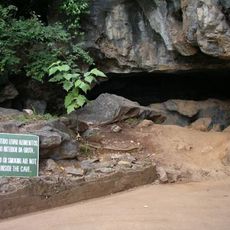
Gruta de Maquiné is a limestone cave in Cordisburgo featuring seven chambers that wind through about 650 meters of underground passages. The rooms display a variety of stalactites and stalagmites in different colors and shapes, along with mineral deposits and spacious galleries that let you walk through multiple levels of the cave system.
In 1834, Danish naturalist Peter Wilhelm Lund explored the cave and discovered fossils of extinct animals like giant ground sloths and large armadillos. These findings established the cave as a key location for understanding Brazil's prehistoric past and what creatures once roamed the region.
The name comes from the Tupi language, meaning "cave." As you walk through the galleries, you can see traces of how indigenous peoples and early inhabitants used this space for shelter and ritual purposes over many centuries.
The cave maintains a steady temperature around 16 to 17 degrees Celsius, so bringing a light jacket or sweater is a good idea even on warm days above ground. Sturdy shoes with good grip are essential because the floor can be slippery in spots, and the lighting system helps you see the features clearly as you move through each chamber.
The sixth chamber, called Salão das Fadas, holds preserved bones of mammoth and other prehistoric creatures embedded within its limestone walls. This remarkable collection in one space draws visitors curious about the ancient animals that lived in this region long ago.
The community of curious travelers
AroundUs brings together thousands of curated places, local tips, and hidden gems, enriched daily by 90,754 contributors worldwide.