Isiboro Sécure National Park and Indigenous Territory, National park and indigenous territory in Beni and Cochabamba Departments, Bolivia.
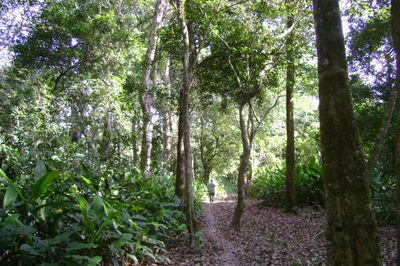
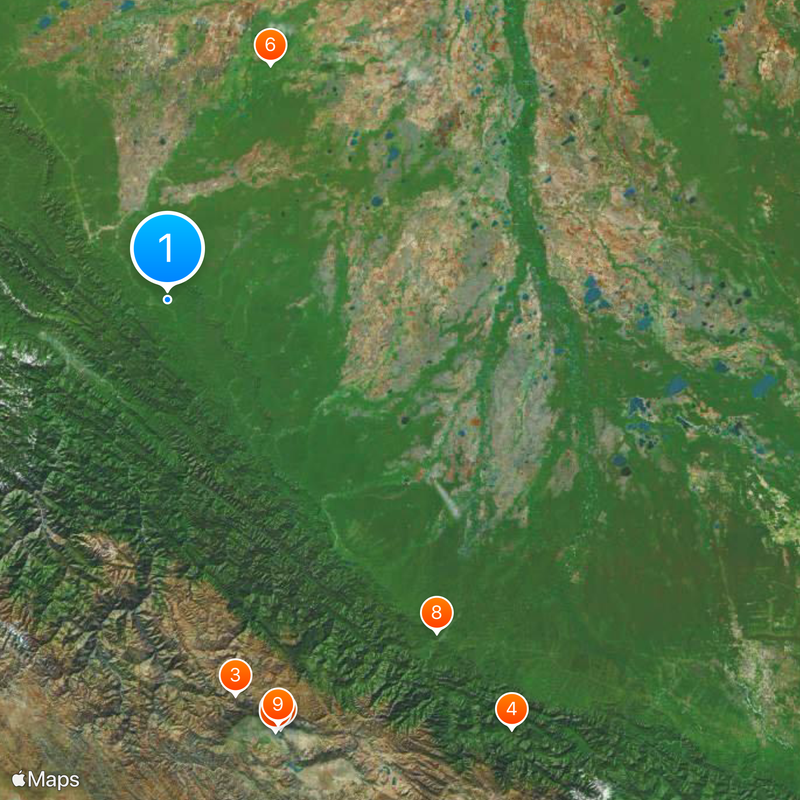
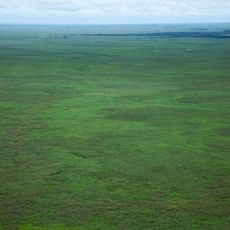
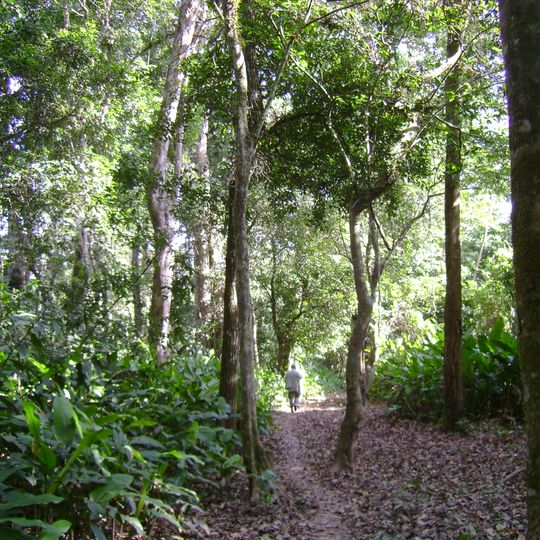
Isiboro Sécure National Park and Indigenous Territory (TIPNIS) covers about 1.24 million hectares between the Beni and Cochabamba departments. Its western part rises in the Sub-Andean ranges, while roughly 62% of the area is the flat Moxos alluvial plain, with swamps, lagoons and old river channels. The Isiboro, Sécure and Ichoa rivers cross the territory, and a dirt footpath runs through tall pale-barked trees and broad-leafed undergrowth.
The Bolivian government created the protected area in November 1965 as a national park to safeguard the region's biological diversity. After years of negotiation with local residents, the territory received additional status as an indigenous homeland in 1990.
The name origin connects the two main rivers Isiboro and Sécure that flow through the protected area and define its geographic boundaries. Fishers and hunters from resident communities use these waterways daily to transport their goods, traveling in canoes between riverside villages.
Rivers serve as main transport routes into the territory, with boats operating along the Isiboro, Sécure, and Mamoré waterways. Travel requires longer journey times and appropriate preparation, as roads exist only on the edges.
French naturalist Alcide d'Orbigny crossed the region in the 19th century and, in his account Journey to South America, called it "the most beautiful jungle in the world". The rivers remain the main way in: boats on the Isiboro, Sécure and Ichoa carry visitors and also shelter pink river dolphins.
The community of curious travelers
AroundUs brings together thousands of curated places, local tips, and hidden gems, enriched daily by 93,687 contributors worldwide.