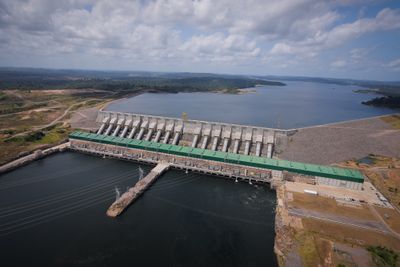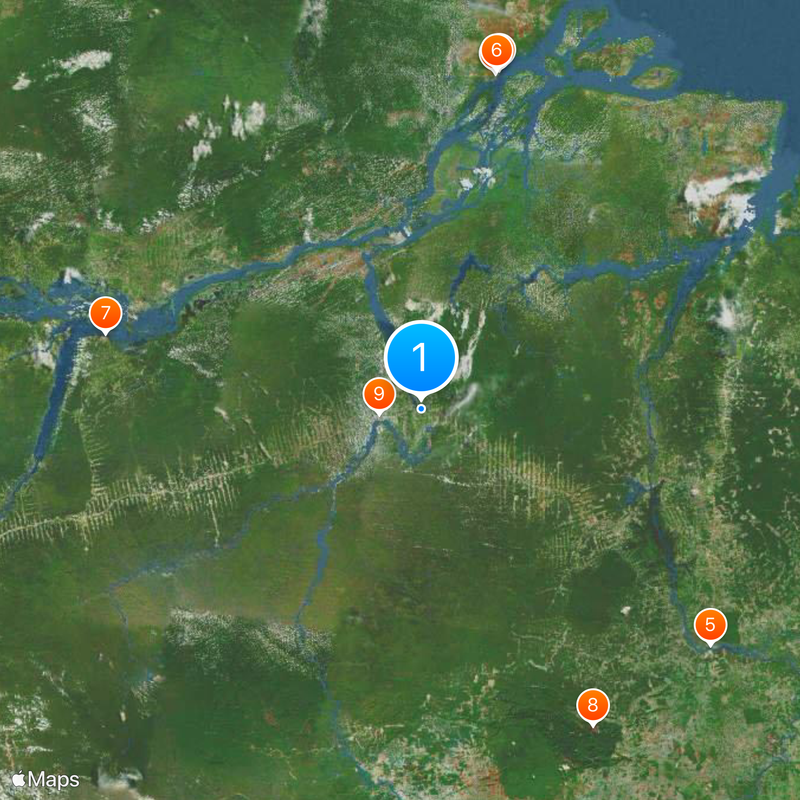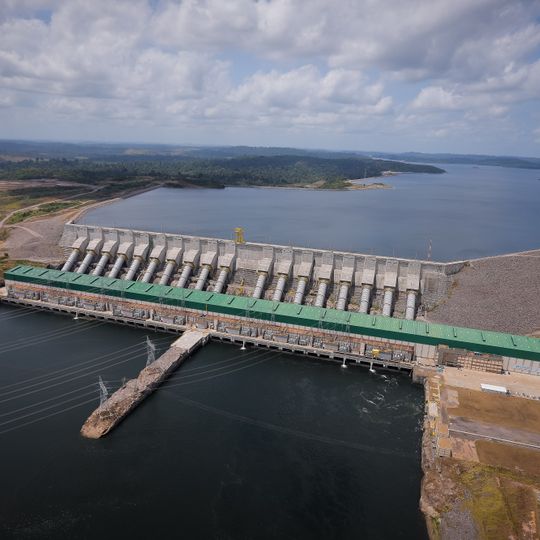
Belo Monte Dam, Hydroelectric power station on Xingu River, Pará, Brazil
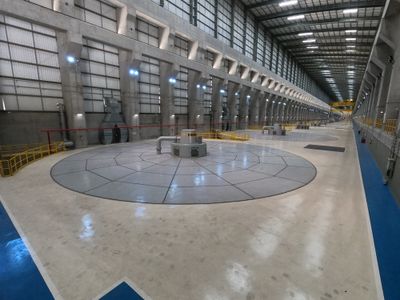
Belo Monte Dam is a run-of-river hydroelectric complex on the Xingu River in Pará, with a main dam at Pimental and a main powerhouse at Belo Monte. Its 18 Francis turbines in the main powerhouse and six bulb turbines at Pimental give 11,233 MW installed capacity. A 20 km diversion canal links the Xingu Reservoir to the Intermediate Reservoir.
Planning for this dam began in the 1970s during the military dictatorship, but construction only started in 2011 after prolonged debates about environmental and social impacts. Some sections of the project were completed and brought online through the second half of the 2010s.
The dam was renamed Belo Monte in 1989, replacing Kararaô, out of respect for the Kayapó people. That year, at the First Encounter of the Indigenous Nations of the Xingu in Altamira, Tuíra Kayapó pressed her machete to the face of Eletronorte president José Antônio Muniz in protest; the singer Sting attended the gathering.
The facility feeds electricity into the national grid, reaching homes across different regions of Brazil. Access for visitors is generally limited to organized tours, as the site functions as an active industrial operation.
During the dry season, actual power output can drop to roughly one-tenth of the rated capacity due to reduced river flow. This variation follows the natural rhythm of water levels in the Amazon basin.
The community of curious travelers
AroundUs brings together thousands of curated places, local tips, and hidden gems, enriched daily by 92,399 contributors worldwide.