Pedra Furada, Rock art cave in Serra da Capivara National Park, Brazil
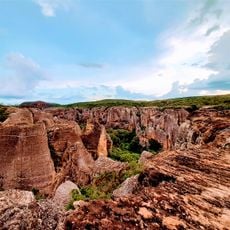
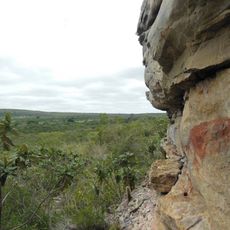
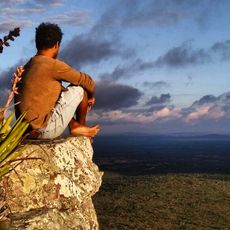
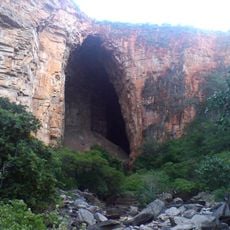
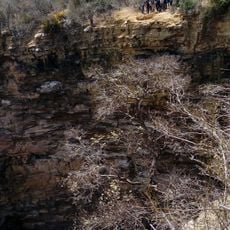
Pedra Furada is a rock shelter with prehistoric art in Serra da Capivara National Park, where over 800 sites contain ancient paintings and remains. The cave walls and natural overhangs are covered with thousands of handpainted motifs reflecting different styles and techniques from various periods.
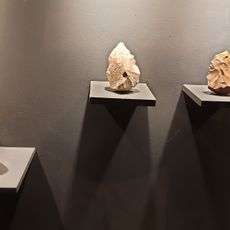
A Franco-Brazilian team led by archaeologist Niède Guidon began excavating in 1973 and found charcoal dated to 48,000–32,000 years before present; Guidon reported the finds in 1986. Repeated analyses extended the range toward 60,000 BP, and 63 radiocarbon dates built a sequence from 59,000 to 5,000 BP. The dates remain disputed, with critics attributing the charcoal to natural fires and the stones to geofacts or capuchin activity.
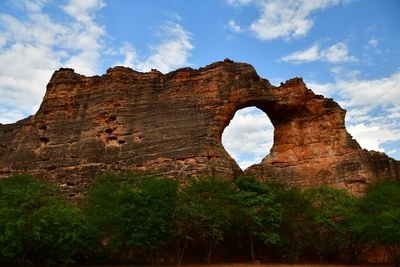
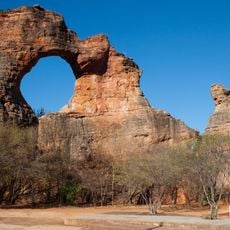
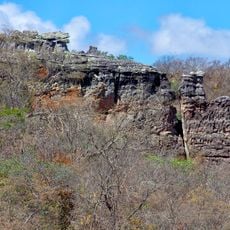
Pedra Furada's name means "pierced rock" in Portuguese, after the arch-like opening in the ochre rock face. The site holds hundreds of rock paintings dated to between 5,000 and 11,000 years ago, and ochre used for painting was found in strata dated 17,000 to 25,000 years ago. The stone industry includes spear-throwers and darts, but no bows or arrows.
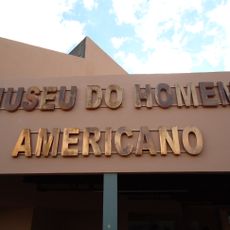
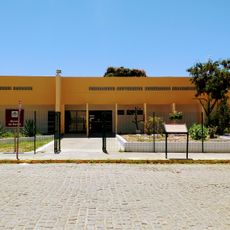
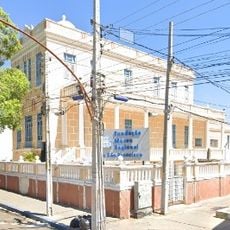
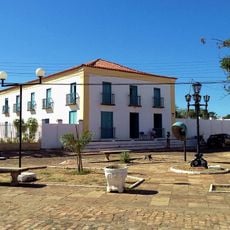
Access to the site is arranged through guided tours organized from the Serra da Capivara National Park visitor center in São Raimundo Nonato. Your guide will explain the paintings and ensure you navigate the rock formations safely.
Wild bearded capuchin monkeys in Serra da Capivara National Park smash stones against embedded rocks, producing flakes that resemble early tools. Researchers have cited this behaviour to argue that some of Pedra Furada's oldest "artifacts" may be geofacts or monkey-made, a dispute that continued as of 2016.
The community of curious travelers
AroundUs brings together thousands of curated places, local tips, and hidden gems, enriched daily by 92,850 contributors worldwide.