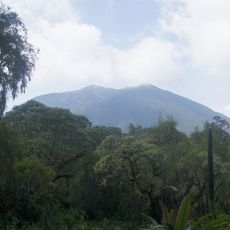
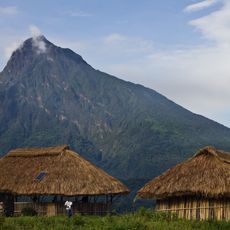
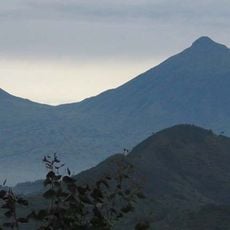
Mount Karisimbi, Stratovolcano in Virunga Mountains, Rwanda.
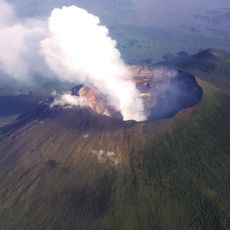
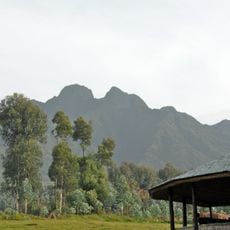
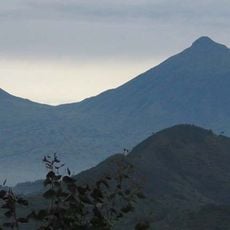
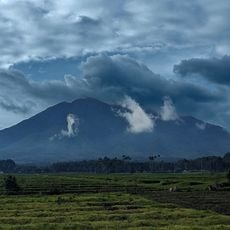
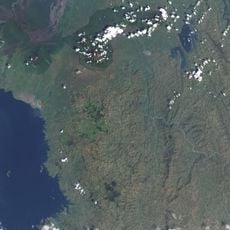
Mount Karisimbi is a stratovolcano on the Rwanda–Democratic Republic of Congo border, reaching 4,507 metres as the highest of the eight major Virunga peaks. Its regular slopes are broken by the 2-kilometre-wide Branca caldera southeast of the summit, the 1.2-kilometre Muntango crater to the south, and a chain of cones stretching toward Lake Kivu.
Karisimbi's first eruptions, dated to 240,000 years ago, emitted viscous lava that flowed 12 km east and southwest from lava domes; the last known eruption was in 8050 BC. Westerners first climbed it in 1903. On 27 February 1908, Egon von Kirschstein's expedition lost twenty porters to a hailstorm and snowstorm while descending the Branca Crater. Dian Fossey founded the Karisoke Research Center between Karisimbi and Bisoke.
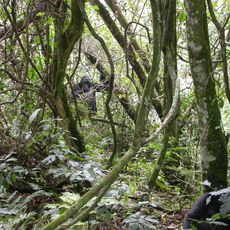
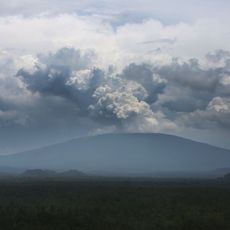
The name Karisimbi comes from the Kinyarwanda word amasimbi, meaning snow. In fact, the summit is periodically covered not by snow but by graupel and hail during frequent thunderstorms, which gives the mountain its name. The slopes within Volcanoes National Park and Virunga National Park hold some of the last wild mountain gorilla populations, studied by Dian Fossey at the Karisoke Research Center between Karisimbi and Bisoke.
The climb typically takes two days and requires permits from park authorities before starting. Visitors should prepare for rain, fog, and cold conditions with sturdy footwear and waterproof gear.
During dry months from June to August, the summit receives snow cover despite being near the equator. This rare combination of tropical forest at the base and snowy peak creates an unusual natural contrast.
The community of curious travelers
AroundUs brings together thousands of curated places, local tips, and hidden gems, enriched daily by 93,135 contributors worldwide.